France 24 heads to Carthage with UNESCO

France 24 heads to Carthage with UNESCO
France 24 heads to Carthage with UNESCO

In partnership with UNESCO, France 24 is offering viewers a new show across all its four language services (English, French, Arabic and Spanish).

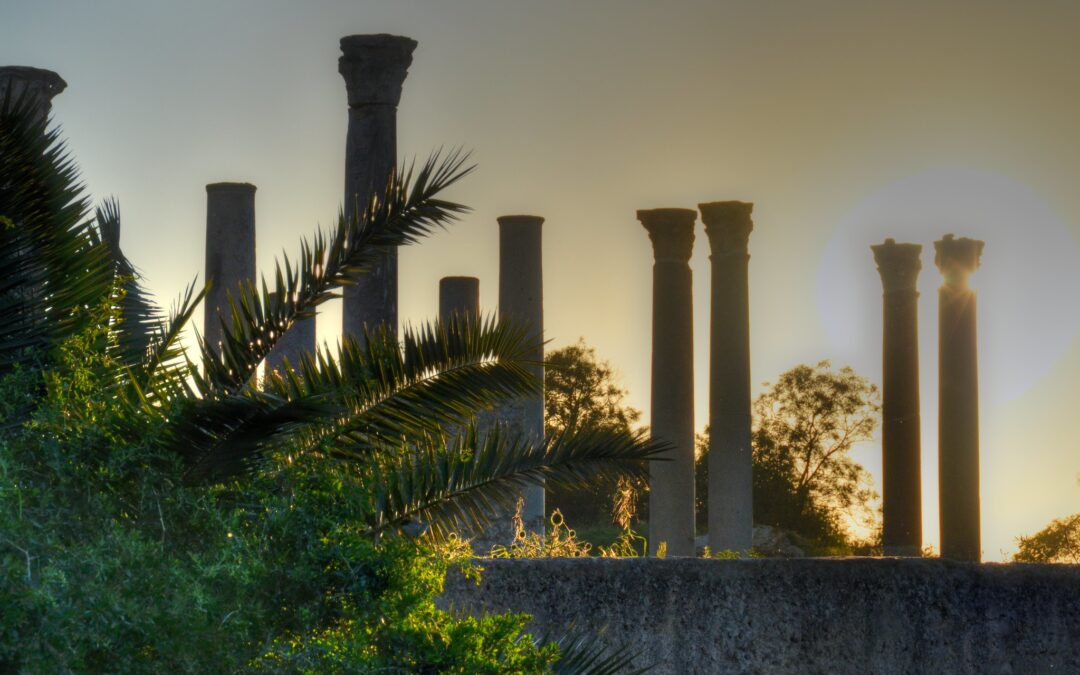
Shared Heritage takes the audience to the heart of the most famous UNESCO World Heritage Sites around the world. The first two episodes of this new programme come from Carthage in Tunisia. Carthage was the capital city of the ancient Carthaginian civilisation, on the eastern side of the Lake of Tunis. The city was one of the most important trading hubs of the Ancient Mediterranean and one of the most affluent cities of the classical world.

The two specials from Carthage will be broadcast on July 17 and 24 at 1710 GMT and will feature a range of special guests. Presenters Stuart Norval (English), Julien Fanciulli (French), Taoufik Mjaied (Arabic) and Erika Olavarria (Spanish) will host two debates on freedom of expression and the freedom of the press as well as the preservation of heritage in Tunisia.

Saturday July 17

Stuart Norval and his guests Nesrine Nasr, researcher at the National Heritage Institute of Tunis, Leila Ben Gacem, consultant and founder of Blue Fish, Karim Hendili Chief of Culture at the UNESCO Regional Office for Maghreb in Rabat and Adnen el Ghali, architect, urbanist, historian and specialist of Tunis Medina’s Heritage, discuss the preservation of heritage in Tunisia and how to protect it for the future. They also discuss the site and treasures that are under threat, and how the past needs to be preserved.

Saturday July 24

Stuart Norval and his guests Emna Mizouni, civil rights activist and co-founder of  Digital Citizenship, Rabeb Aloui, journalist and Nidhal Ghariani, cartoonist, discuss the situation facing the media and activists in Tunisia under former President Ben Ali, how it has changed, and if that change is slipping back again towards the old repressive ways. They also discuss how perilous it was to draw or publish cartoons before the revolution. Finally, they talk about fake news and how to debunk it.

Future episodes of Shared Heritage will come from other UNESCO World Heritage Sites over the coming months.

Photo: Stephen Downes/Flickr
World Press Freedom Day 2016

World Press Freedom Day 2016

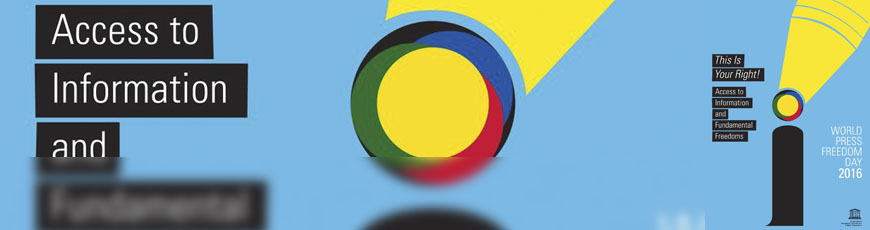
3 May marks World Press Freedom Day. The international day was proclaimed by the UN General Assembly in 1993 following a Recommendation adopted at the 26th Session of UNESCO’s General Conference in 1991. This in turn was a response to a call by African journalists who in 1991 produced the landmark Windhoek Declaration on media pluralism and independence.

Every year, 3 May is a date which celebrates the fundamental principles of press freedom; to evaluate press freedom around the world, to defend the media from attacks on their independence and to pay tribute to journalists who have lost their lives in the exercise of their profession.

AIB Members around the world are marking the day, such as this video produced by Euronews with the International Federation of Journalists:

AIB celebrates the business of radio

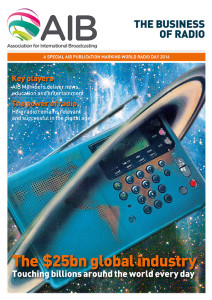
Business of Radio coverRadio, the oldest electronic mass medium, is in good health and well positioned for the future. That’s the message from the Association for International Broadcasting as World Radio Day 2016 is marked internationally.

“Radio generates revenues of well over US$25m every year,” comments Simon Spanswick, chief executive of the Association for International Broadcasting (AIB). “Radio is a major a generator of economic growth and employment – both in front of and behind the microphone. Every day, it touches the lives of billions of people, providing news, information, entertainment and education. At the AIB we’re delighted to join with our Members to celebrate the continued relevance and importance of radio on 13 February, the day designated by UNESCO as World Radio Day.”

The AIB is publishing a special souvenir book to demonstrate the value of radio internationally. ‘The Business of Radio’ provides insight into the radio industry and profiles Members of the AIB who operate radio networks and the service providers that keep radio on the air around the world.

‘The Business of Radio’ is being sent to opinion-leaders including parliamentarians and media regulators around the world to remind them of the key role that radio continues to play, even in the digital age of mobile apps and social media.

“The strength of radio is its ability to connect people in a way that other media cannot,” continues Spanswick. “At the AIB, we are delighted to see that our radio Members are reacting positively to the changes in media consumption habits. For example, they make sure that their programmes are available via multiple platforms, increasing their reach as they do. The AIB is pleased to be accompanying them on their journey into radio’s bright future.” or as a downloadable PDF at

‘The Business of Radio’ includes articles contributed by a number of the AIB’s Members, including the BBC, Broadcasting Board of Governors, RNW Media, Radio Taiwan International and DW. It is available in digital page-turning format at http://aib.org.uk/Resources/BizofRadio.html or as a downloadable PDF here.

It’s World Radio Day 2013

World Radio Day 2013

February 13 marks World Radio Day, a celebration of the world’s oldest mass communication medium.

Radio remains the most widely-consumed media on the planet, with broadcasters reaching listeners on traditional FM and AM services, as well as via satellite, set top boxes, mobile phones and the Internet.

Radio is a trusted friend to many and a primary source of news and information. It’s engaging. It’s portable. It’s always available.

We’ve from Finland where every radio station joined together to offer a love poem to listeners, we’ve heard of events across India celebrating the medium.

As we mark World Radio Day 2013, AIB salutes its radio broadcaster members and all radio broadcasters around the world.