BBC has an ever greater international role, says its Director-General
BBC has an ever greater international role, says its Director-General
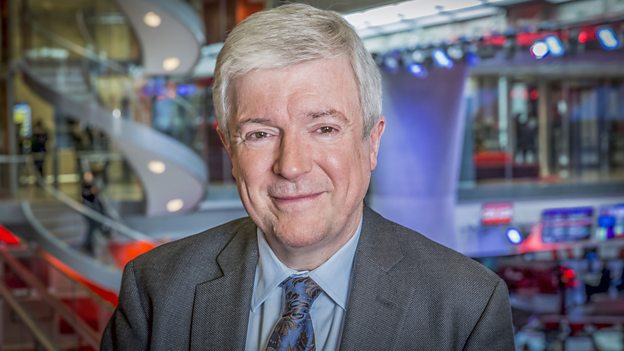
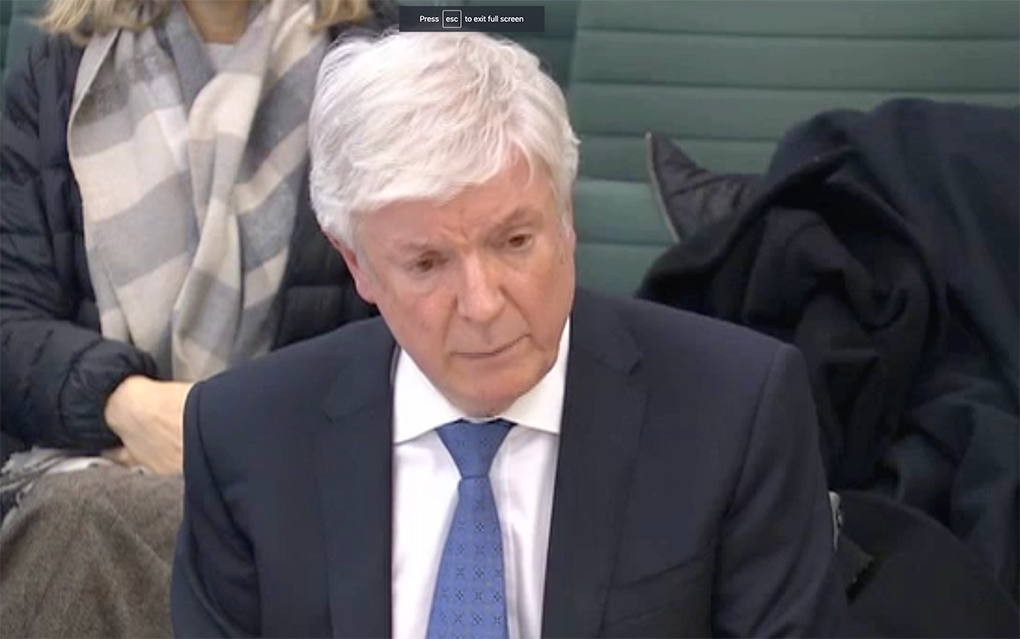
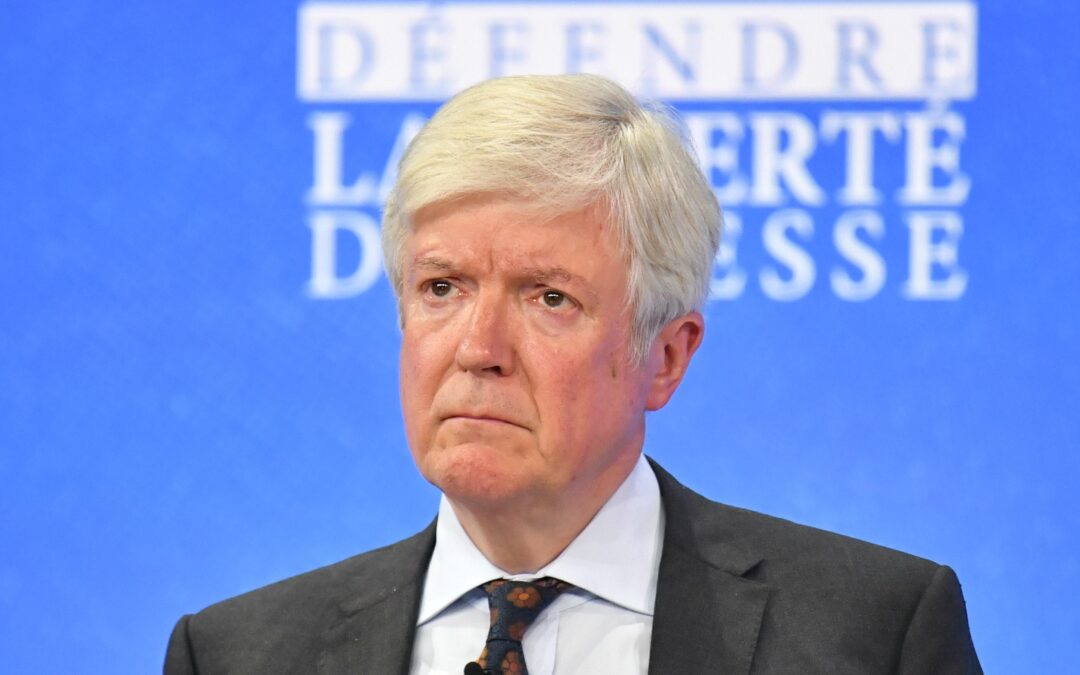
The BBC Director-General, Lord Tony Hall, gave a speech to the virtual Edinburgh International TV Festival on 24 August. He spoke of the role that the Corporation has as an interwoven part of the fabric of UK life, the importance of public service broadcasting and the BBC’s ever more significant international role. Here is the text of his speech.
It’s a pleasure to be speaking to you today, even with all the limitations of Zoom, because I believe the debate you’ll be having – about the role of PSBs – is important, vital and necessary. Our response to Covid-19 has taught us a lot about our role. But so has our response to the killing of George Floyd. There are lessons for us all. You see to my mind media is not only a business, of course it is, but it’s also about our culture – who we are, what makes us tick, what brings us together, what entertains us, what divides us, what inspires us, what shocks us. The stories we tell about who we are. The PSBs are vital to democracy. They inform us. They educate us. And in this country they do that equally for all – whoever you are, wherever you are, rich or poor, old or young – you have access to the best. No pay wall. No subscription – free.
The PSB ecology we have in this country is unique. And it works. I know. I am in the final year as President of the EBU. People outside this country envy what we have. PSBs are under threat everywhere. Of course, we always need to adapt and reform. Yet we are a vital part of any country’s culture – we help define and shape it – just as galleries, museums, theatres do. And of course we are at the heart of the creative economy – one of our huge strengths. Which is why giving voice to talent from wherever it comes is vital to our future. And why diversity and inclusion is so intertwined with the role of public service broadcasting. So a great debate to have – and at the right time.
But first let’s stand back and look at what our audiences think about us.
The tragedy and calamity of the Covid crisis has taught us a lot. In a strange sort of way, it’s been a massive, consultation in real time on what the British public want and expect from great public service broadcasting.
For the BBC, I felt the clarity of our mission came into even sharper focus.
Almost overnight, we reconfigured all our output around the most urgent needs of the nation.
Audiences came to us in their millions – for news and information they could trust, for educational support they could rely on, for world-class content, culture and also for respite from the worries we all, every one of us, was experiencing. Whatever is happening in the world – however ghastly it is – we all need something to make us smile.
And the response…
Well, in March, BBC 94% of the British people used the BBC. And, here’s a key fact, 87% of 16-34s did so. In some weeks, TV viewing was up nearly 50% year on year. TV news hit the highest levels since 2003. There were huge audiences for dramas like Normal People and Killing Eve. But also record ratings for shows that helped us escape the confines of lockdown – like The Repair Shop, Masterchef and (one of my particular favourites) Race Across the World.
During this time, around 24% of all UK video, audio and online time spent by the average adult in a week was with the BBC. Netflix was around 4%.
So what did all this tell us about the role of PSBs in today’s media landscape? And about the role of the BBC in particular? For me, there are two big conclusions.
First, public service values have never been more needed. We’ve been reminded how deeply stitched we are into the fabric of national life.
Second, the BBC – and public service media more widely – can now do more for the UK than ever before. And we’re ready to do more. We’ve reformed and reinvented ourselves for the digital age. There’s much further to go, but we’re already delivering.
And that’s what I want to focus on today.
First, we’ve been reminded how important are those things that bring us all together especially at times of crisis, division and fracture.
We all know, and feel, how the last few years have heightened the sense of polarisation in our society.
Covid has come along and brutally exposed fault lines of deprivation and demography. The killing of George Floyd has left no one in any doubt about the scale and feeling of injustice in our society. And recession may well fan that anger and unfairness still further.
Public service broadcasters – and the BBC in particular – have always been part of the glue that binds our nations and communities together. But the last few months have emphasized that still further.
Despite the lockdown we were all able to commemorate VE Day – or the end of the war in the east just a few days ago. There was no Glastonbury, but we all managed to make our own. We were able to come together across five national radio networks to join the Great British Singalong. April’s Big Night In fundraiser raised £70 million for charities, was backed by the Government, and helped vulnerable people all across the UK.
Our local radio stations in England set up a helpline called Make a Difference, linking those who could offer help with those who needed it. By the end of June over a million people had been in contact and offered or given support.
In April, we pulled out all the stops to support pupils, parents and teachers as schools closed. We produced the biggest educational offer in our history: two hours of original broadcast programming every day; 2,000 hours of curriculum-led daily lessons on Bitesize, with 5 million visitors a week… 5 million!
By the way, we’re talking with the education sector about taking this a stage further working with them on an idea of the ‘open school’ in the tradition of the open university. Think of what we could do pooling all our resources for the benefit of the next generation.
And of course I’ve not mentioned the support we gave to the arts through our Culture in Quarantine programme – an unprecedented collaboration which linked artists, musicians, cultural organisations with audiences in a way that only we can do. We’ll be taking this on into the autumn with even greater ambition. This could change the way the BBC works with the arts fundamentally and forever.
My second point is that our responsibility as the UK’s most trusted news provider has never been clearer and more important. It’s right at the heart of this duty to help bring the nation together.
The forces of disinformation and social media tend to feed on fracture and drive polarisation.
They’re often specifically designed to exploit division for commercial or political gain; to unsettle societies or undermine democracy.
What we do, as a PSB, is a force in the opposite direction. Our goal is to help strengthen society and build bridges by making sure all voices and perspectives are heard.
This is about much more than protecting integrity in news, critical as that is. Impartiality is the keystone of broadcast journalism in this country.
It’s also about helping to protect our democratic integrity, and fostering unity and cohesion.
A few weeks ago, I interviewed Mike Ryan – a highly articulate leader in the WHO. We were talking at a seminar for PSB leaders from across Europe. Why you people are so important, he said, is because even if we have a vaccine tomorrow – up to thirty percent of people, according to polling, would not use it. There is he said another pandemic… that of misinformation.
Today the BBC ranks first with the British public for impartial news, and first for information you can trust – we’re way ahead of the rest.
We also rank first for trust and reliability abroad. In fact, BBC News is now more trusted in the US than all major US news providers.
More and more, in the fake news world, truth is a priceless commodity in our societies.
So let’s not forget that, in the BBC, the UK has a remarkable asset: the pre-eminent provider to the world of facts you can trust.
My third point is that the international reach of the BBC is absolutely crucial to any vision of ‘Global Britain’.
Four years ago, I convinced the then Government – well, George Osborne to be precise – to make its largest-ever increase in investment in the BBC World Service.
That funding – £86 million a year – allowed us to complete the biggest expansion of the World Service since the Second World War.
We now operate in 42 languages. We’ve opened new bureaux with more local journalists on the ground. We’ve got new investigative teams holding power to account around the world.
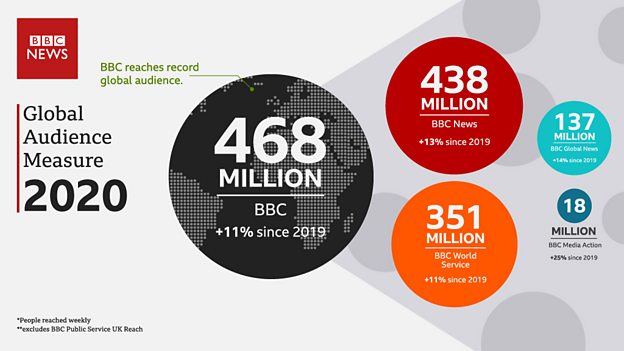
My goal, when I arrived at the BBC, was to double our global audience to reach 500 million people by 2022 – our centenary year. With two years to go, we are today reaching 468 million people each week… 468 million.
We have plans in place to double that ambition – to reach a global audience of 1 billion people by the end of the decade. But it needs extra investment from government and that bid is with them right now.
No one can do more to carry Britain’s voice and values to the world.
Independent research shows there’s an exceptionally high correlation between places where people are aware of the BBC and places where people think positively about the UK. We even help UK trade.
This could hardly be more important as Britain sets out to forge a new relationship with the world, based on an ambitious vision of ‘Global Britain’.
Success will mean drawing on all our considerable international assets. And that means unleashing the full global potential of the BBC.
And my final point is that Britain in a post-Brexit world must play to its greatest strengths – one of which is the creative industries.
Just as the NHS underpins Britain’s global excellence in research and life sciences, so the BBC – and our unique PSB ecology – underpins the excellence of our creative industries.
This is the sector that, before the crisis hit, was the fastest-growing part of the economy, worth over £100 billion a year. And British creativity is one of our most valuable global exports.
The BBC has long been the single biggest investor in – and platform for – British talent and content.
With creative hubs in every part of the UK, we’re an engine of ideas, risk-taking and ambition that powers the whole of the sector. Every £1 we spend generates £2 for the UK economy. And by the way I know we can do more. As I said at the beginning of the year I believe 70% of the BBC should be based out of London by the end of this charter. And interestingly I think that will be easier and cheaper to achieve in a post-Covid environment.
But there’s one statistic that I think really brings home what our PSB system means for the strength of our creative industries. In 2018, PSBs delivered over 32,000 hours of UK-made original content. The big streamers? 221 hours.
Yes, we need to keep reforming, keep listening and learning about how we can do better. But let’s not forget that PSBs are the magic formula for British success in the global media age. And let’s explore ways to build on their strength, so they can do even more for our economy, for our society, for employment.
So the conditions are there for the BBC to deliver more for audiences, and to be even closer to them. Let’s go back and look at what the data is telling us. It shows we have reached the point where for the first time the decline in audiences to linear channels has been compensated by the uptick in our delivery to audiences online and on demand.
This is a really important moment: history is littered – not just in media, but across many sectors – with companies and organisations that failed to adapt to the digital world. Many great names have fallen. The BBC isn’t one of them. We have made the pivot to a new world. And the BBC is in a great position to continue to thrive in the future.
iPlayer is breaking all records – 4.8 billion requests last year, up 38%. And, for the first time, as I say, growth is making up for the fall in linear TV viewing. The reforms we’ve been making particularly around the length of time content stays on iPlayer, are paying off. We’re the only place you can get that mix of live and on demand. That’s unique – it sets us apart. And BBC Three has played a massive role – growing new talent, delivering some of our best performing programmes, winning Channel of the Year three times.
Now we’re using data to give people a much more personal iPlayer service. 49 million people have now signed in to the BBC – how we use that data to get closer to them, to make them feel the BBC is theirs, really theirs, is going to be crucial.
BBC Sounds now has 3.6 million weekly users. It’s beaten all targets in its first full year – including for younger audiences. As I said at the time, we want to bring the on demand experience to radio and to podcasts – and then to take it global. It was a controversial and hard fought move. But again it’s worked.
And all this means that, far from losing touch with young audiences, we’ve really boosted our performance – reaching as many as 8 out of 10 young people.
We’re all set to compete with the very best in the global digital age.
This has come as result of a real focus on reforming the organisation whilst holding onto the values we believe in. I don’t need to remind you, seven years ago we were an organisation in crisis. It was in the wake of the Savile scandal, there were failings over executive pay-offs, there were fundamental questions hanging over our future.
Today we’re an organisation transformed, inside and out.
We’re leaner and more efficient than ever. Our overheads are at industry-leading levels – just 5% of our total costs, meaning 95% goes on programmes and services.
Seven years ago we had an in house production operation in decline. Today we have BBC Studios – the most-awarded British production company in the UK.
My thanks to my successor Tim Davie, who has led that brand new organisation brilliantly.
We have a first rate partnership with ITV to run BritBox bringing the best of public service programming both globally and now in this country too.
We’re more out of London than ever before. A decade ago, a third of the BBC was based outside the M25. Today it’s half.
In the last few years, We’ve doubled the proportion of programmes produced in Scotland, Wales, and Northern Ireland. And our new BBC Scotland Channel has been a major success. In its first full year, it’s reaching 1 in 6 people each week.
This matters not only because it means so much to audiences to see their lives and communities represented on screen. But also because, as the national broadcaster, spread across all our nations and regions, who is better placed to support the levelling-up agenda?
Of course, The best case for public service broadcasting is made through the quality, the range and authenticity of the programmes. That’s the way to the hearts and minds of younger audiences or indeed all audiences. When I look at something like Michaela Coel’s extraordinary I May Destroy You – I see much more than an unmissable drama. I see a unique voice and talent given unprecedented creative freedom to speak directly to a generation about issues and experiences that matter right now.
When I watched Once Upon a Time in Iraq I’m seeing not only a documentary about the horror of war told by those who were there – and how brilliant was that – but I’m also seeing a series that pushes the boundary of what the genre does. I’ve seen nothing like it.
When I watched David Olusoga’s outstanding programmes on Empire, on Windrush, on being black and British, I thought that these are programmes with deep public service values at their heart. Helping the country, us all, to wrestle with complex issues of identity and history. That’s what we’re all here to do.
This is what we need to stand for. A duty to take risks. To create a space where artists, performers, writers, directors, journalists – do the work of their lives.
So who we employ and how we employ people matters. You don’t know where the talent of tomorrow will be found. That’s why we have massively upped our game on creative diversity. We’ve prioritised £100 million of our commissioning budget for diverse and inclusive programming. And we’ve introduced a new mandatory 20% diverse-talent target in all new network commissions from next April. It means we’re throwing open the doors of the BBC more widely than ever to diverse stories and diverse storytellers. And we’ve already followed it up by doing the same with £12 million of our commissioning budget across Radio and Music.
But to get the best people we also need the best working environment. And the most inclusive one. Satya Nadella, the boss of Microsoft who I first met when we worked on an education project with them, talked about the culture of Microsoft as being one where people are encouraged to realise their personal passions. I like that. Because I believe diversity of thinking leads to great programmes.
We need to attract people who are different, who have different ideas about what matters, who draw on different experiences, who come from different backgrounds. That for me is THE argument for greater diversity. It’s about creativity – promoting talent to deliver diverse thinking. And that in turn brings about great programmes that make sense of and reflect the world in which we live. And we have got to be better at that than anyone else.
So there is no doubt in my mind that PSBs can do more than ever for the UK in the years ahead.
We have to keep banging the drum for what only we can deliver. The role we can play in helping to find the answer to so many of the biggest issues now facing society. From division and polarisation, to the rise of fake news and disinformation, to our creative and cultural strength, even to helping society safely navigate a path through the Covid crisis.
I was much taken with what Daniel Ek, the founder of Spotify said to me last year. In the next thirty years, he said, only those companies with strong values will survive. That’s why public service broadcasting is so much more than an idea of the past. It’s an idea whose time has well and truly come. More relevant, and more needed, than ever.

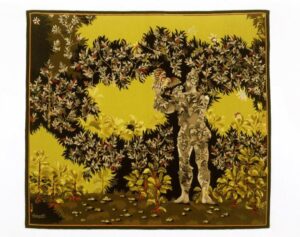 After the war, to thank the BBC for its singular World War Two broadcast contribution, the French government presented the BBC with a specially commissioned tapestry ‘Le Poète’ [pictured] made by Jean Lurçat, inspired by a poem by Paul Éluard, ‘Liberté’. A metaphor for the role of the Resistance in fighting against Nazism, but also for the importance of broadcasting and freedom of speech, it hangs in the Artists’ Lobby at the BBC’s Broadcasting House.