Russia labels DW ‘undesirable organization’

The BBC has said that it strongly rejects the decision by the Russian authorities to designate Ilya Abishev and Elizaveta Fokht as “foreign agents”. BBC News Russian journalists have been singled out, following earlier designations of Ilya Barabanov, Anastasia Lotareva, Andrey Kozenko, and Olga Ivshina.
BBC News Global Director and BBC Deputy CEO, Jonathan Munro, says: “It has now become a routine exercise for the Russian authorities to add BBC News Russian journalists to their list of ‘foreign agents’. The BBC wholly condemns this ongoing attempt to intimidate and silence our journalists. Aimed at having a disruptive and damaging effect, these arbitrary designations can’t stop our journalists doing their jobs. Journalism is not a crime, and our reporters will continue serving our Russian-speaking audiences just as they have done for almost 80 years: independently, fairly, and fearlessly. We are proud of all our journalists. We will challenge these actions by the Russian authorities in the courts. These journalists have our total support.”
Part of BBC World Service, BBC News Russian is a key provider of impartial and independent news to the Russian-speaking world, reaching its audiences across a range of digital platforms.
After more than nine months in prison, American RFE/RL journalist Alsu Kurmasheva has been released as part of a large-scale prisoner exchange between the United States and Russia. The deal included Wall Street Journal reporter Evan Gershkovich, who was detained by the Kremlin for 16 months.
RFE/RL President & CEO Stephen Capus said: “We welcome news of Alsu’s release and are grateful to the American government and all who worked tirelessly to end her unjust treatment by Russia.
Alsu was targetted because she was an American journalist who was simply trying to take care of a family member inside Russia. She did nothing wrong and certainly did not deserve the unjust treatment and forced separation from her loving family members and colleagues.
Alsu’s release makes us even more determined to secure the freedom of three other RFE/RL journalists, cruelly imprisoned in Belarus and Russian-occupied Crimea. We will not rest until all our unjustly detained journalists are home safe. Journalism is not a crime.
Welcome home, Alsu.”
Pavel Butorin, Alsu’s husband and Director of RFE/RL’s Current Time television, said: “Today, my daughters and I are witnessing a historic act of resolve and compassion by the U.S. government and its allies, demonstrating that the free world values human life and family above all else, even when it means exchanging real criminals and spies to save wrongfully detained Americans.
After over a year of separation and more than nine months of brutal detention, Alsu will finally be free. Thanks to the unwavering efforts of the U.S. government and our tireless advocacy work, she will soon reunite with her family.
For more than nine months, Alsu was denied basic human dignity. She was locked up in horrific prison conditions, denied phone calls with her children or U.S. consular visits, and deprived of proper medical care. She was convicted in a secret trial for a crime she did not commit, held in jail solely because she is an American and an American journalist.”
Alsu Kurmasheva is a journalist with RFE/RL’s Tatar-Bashkir Service who was detained in Kazan, Russia, on October 18, 2023. Alsu holds U.S. and Russian citizenship and lives in Prague, Czech Republic, with her husband and two daughters.
Alsu travelled to Russia on May 20, 2023, to care for her elderly, ailing mother. She was temporarily detained while waiting for her return flight on June 2, 2023. Authorities at Kazan airport confiscated her US and Russian passports, preventing her from leaving the country. She was subsequently fined 10,000 rubles (US$103) for failure to register her US passport with Russian authorities.
Before she could pay this fine, she was detained again on October 18, 2023, for failing to declare herself a “foreign agent.” On December 11, 2023, Russian authorities launched a third investigation against Alsu for “spreading false information” about Russia’s military.
Following a rapid and secret trial, Kurmasheva was convicted of “spreading false information” about Russia’s military on July 19, 2024, and sentenced to six and a half years in prison.
Image: RFE/RL
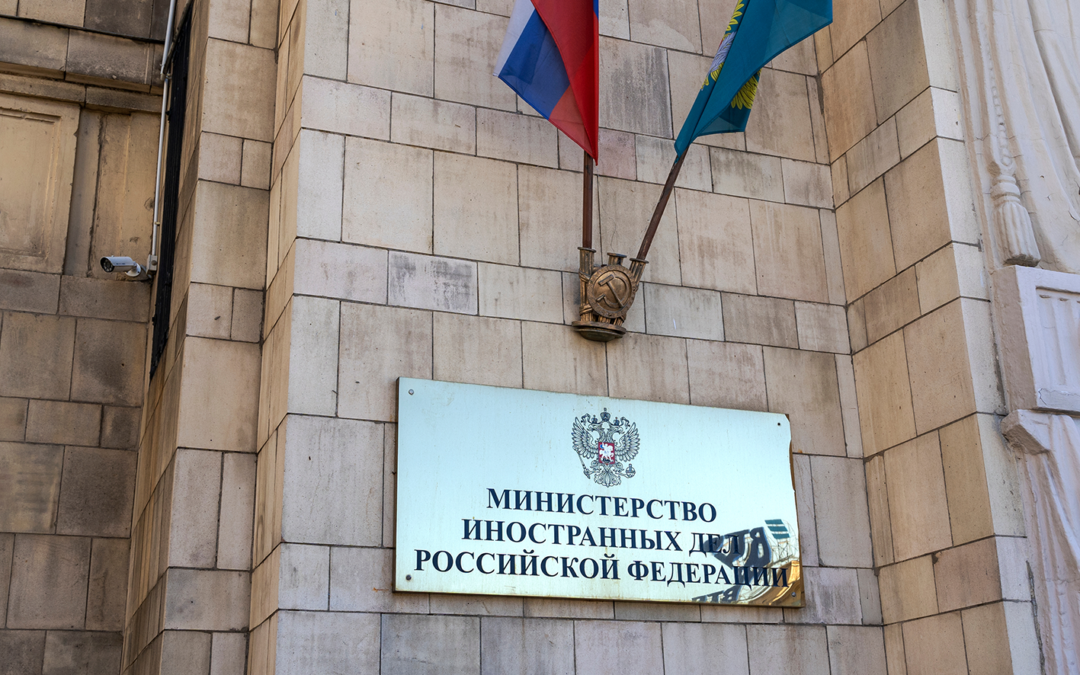
Russia’s Foreign Ministry has announced bans on a large number of media companies – broadcast, digital and print – based in EU Member States. The move is in response to the continuing bans in place in the EU that prohibit many Russian media outlets from being broadcast in EU Member States.
In a statement on 25 June, the Ministry said:
In response to the May 17 decision of the EU Council, banning broadcasting by three Russian media outlets, including RIA Novosti, Izvestia MIC and Rossiyskaya Gazeta, effective as of today, June 25, countermeasures are being introduced that limit access to broadcasting resources in the Russian Federation for media outlets of the EU member states and EU media operators that systemically spread false information about the special military operation.
The Russian side has repeatedly warned at various levels that politically motivated persecution of Russian journalists and unjustified bans on Russian media outlets in the EU will not go unanswered. This notwithstanding, Brussels and the capitals of the bloc’s countries preferred to further escalate the situation. By imposing another illegitimate ban, they forced Moscow to introduce symmetrical and proportional countermeasures. Responsibility for these developments rests solely with the EU leadership and the countries of this association that support this decision.
The Russian side will revise its decision concerning the above-mentioned media operators if restrictions against Russian media outlets are lifted,
***
A list of media outlets of the EU member states and EU media operators, covered by retaliatory measures and restrictions limiting broadcasts and internet access on the territory of the Russian Federation
Austria
1. ORF Broadcasting Corporation (orf.at);
2. Osterreich Media Holding (oe24.at);
Belgium
3. Le Vif magazine (levif.be);
4. Knack magazine (knack.be);
Bulgaria
5. Mediapool news and information website (Mediapool.bg);
6. 24 Chasa newspaper (24chasa.bg);
Hungary
7. 444.hu online information website;
Germany
8. Der Spiegel magazine (spiegel.de);
9. The Zeit newspaper (zeit.de);
10. Frankfurter Allgemeine Zeitung newspaper (faz.net);
Greece
11. Hellenic Broadcasting Corporation EPT (ert.gr, ertnews.gr);
12. Skai Media Holding (skai.gr);
13. Mega television channel (Megatv.com);
14. Proto Thema newspaper (protothema.gr);
Denmark
15. Berlingske daily newspaper (berlingske.dk);
16. Information newspaper (information.dk);
Ireland
17. RTE Television and Radio Broadcaster (rte.ie);
18. The Irish Times newspaper (irishtimes.com);
19. The Irish Independent newspaper (independent.ie);
Spain
20. El Mundo newspaper (elmundo.es);
21. El Pais newspaper (elpais.com);
22. EFE news agency (efe.com);
23. Spanish state television broadcaster (rtve.es);
Italy
24. LA7 television channel (la7.it);
25. La Stampa newspaper (lastampa.it);
26. La Repubblica newspaper (repubblica.it);
27. RAI radio and television broadcaster (rai.it, rainews.it);
Cyprus
28. Politis newspaper (politis.com.cy);
29. Cyprus Times online information website (cyprustimes.com);
30. Cyprus Mail newspaper (cyprus-mail.com);
Latvia
31. Latvian Television Latvian Radio 4 (lsm.lv);
32. Internet portal apollo.lv;
33. Internet TV channel tvnet.lv;
34. Diena daily newspaper (diena.lv);
Lithuania
35. Internet portal LRT (lrt.lt);
36. Internet portal 15min.lt (15min.lt);
37. Internet portal lrytas.lt (lrytas.lt);
Malta
38. Television Malta TVMstate television channel (tvmnews.mt);
39. Times of Malta newspaper (timesofmalta.com);
40. The Malta Independent newspaper (independent.com.mt);
41. Malta Today newspaper (maltatoday.com.mt);
The Netherlands
42. Nos Television and Radio Company (nos.nl);
43. Nrc newspaper (nrc.nl);
44. Algemeen Dagblad newspaper (ad.nl);
Poland
45. Belsat TV channel (belsat.eu, belsat.pl);
46. Nowaja Polsza magazine (novayapolsha.eu, novayapolsha.com novayapolsha.pl);
Portugal
47. RTP international television channel (rtp.pt);
48. Publico newspaper (publico.pt);
49. Expresso newspaper (expresso.pt);
50. Observador news and analysis project (observador.pt);
Romania
51. Pro TV international television channel (satellites Eutelsat 16A -16 EST and Astra 5B – 31.5 EST; websites: stirileprotv.ro, protv.ro);
52. Digi24 TV channel (satellite Eutelsat 16A – 16EST; website: digi24.ro);
53. B1TV television channel (satellite “Astra 5B – 31.5 EST”; website b1tv.ro);
Slovakia
54. SME newspaper (sme.sk);
55. Dennik N internet publication (dennikn.sk);
Slovenia
56. Nova24 internet publication (Nova24.si, Nova24tv.si);
57. Demokracija internet publication (Demokracija.si, Demokracija.eu);
Finland
58. Ilta-Sanomat newspaper (is.fi);
59. Iltalehti newspaper (iltalehti.fi);
60. Helsinki Sanomat newspaper (hs.fi);
61. Yleisradio television and radio company (yle.fi);
France
62. LCI television channel (tf1info.fr);
63. Le Monde newspaper (lemonde.fr);
64. La Croix newspaper (la-croix.com);
65. Liberation newspaper (liberation.fr);
66. Lexpress magazine (lexpress.fr);
67. Radio France radio company (radiofrance.fr);
68. Agence France-Presse news agency (afp.com, afpforum.com);
69. CNews television channel (cnews.fr);
70. Arte TV television company (arte.tv);
The Czech Republic
71. Ceska Televize TV channel (ceskatelevize.cz);
72. Law enforcement internet portal (seznamzpravy.cz);
Sweden
73. SVT television and radio company (svt.se);
74. Sveriges Radio radio company (sverigesradio.se);
Estonia
75. Information web portal propastop.org;
76. ERR National Broadcasting Corporation (err.ee);
77. Delfi media resource (delfi.ee);
European media outlets
78. Agence Europe (agenceurope.eu);
79. Politico (www.politico.eu, www.politico.com);
80. Freedom Satellite Package;
81. Euobserver internet publication (Euobserver.com)
Image: Adobe Stock I – stock.adobe.com
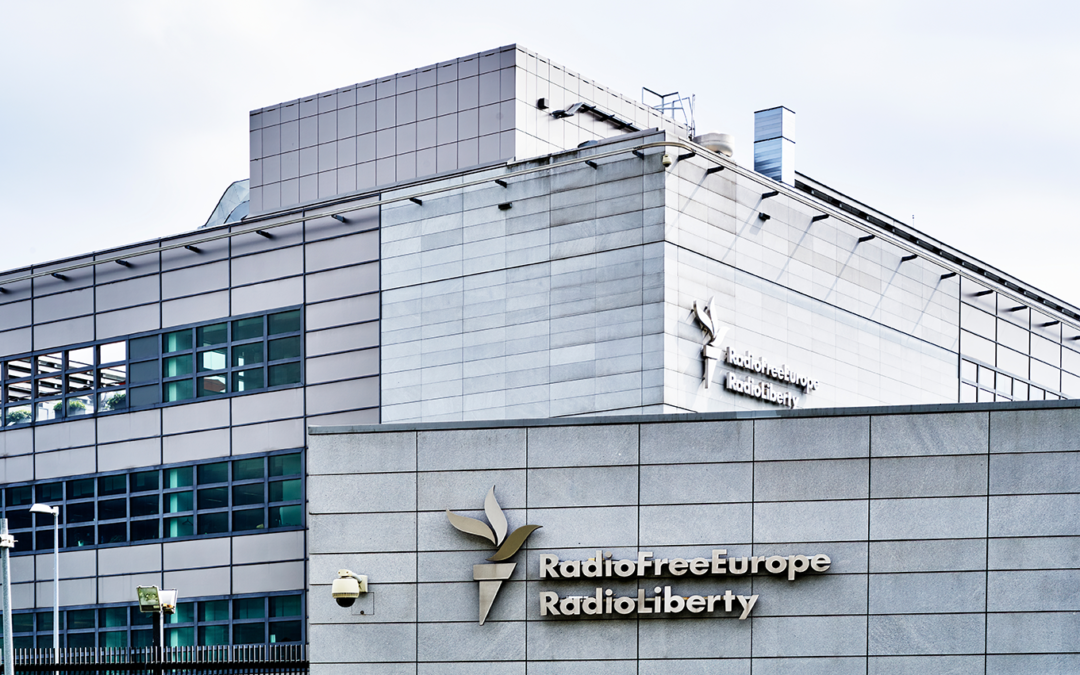
The Russian government has designated Radio Free Europe/Radio Liberty an “undesirable organisation,” according to a registry maintained by the country’s Justice Ministry.
The label effectively bans RFE/RL from working in Russia and exposes anyone who cooperates with the outlet to potential prosecution.
RFE/RL President Stephen Capus said the move shows that Moscow considers independent reporting to be “an existential threat.”
The move comes just days after the death of Russian opposition leader Alexei Navalny.
Image: Adobe Stock