AIB publishes FIFA World Cup 2026 safety briefing for media organisations

AIB publishes FIFA World Cup 2026 safety briefing for media organisations

AIB publishes FIFA World Cup 2026 safety briefing for media organisations

​The Association for International Broadcasting (AIB) has published a new safety briefing for member organisations ahead of the FIFA World Cup 2026, which will take place across the USA, Mexico and Canada.

The briefing has been developed to support broadcasters, production companies and media organisations deploying staff to the tournament, with a particular focus on operational, legal and digital security risks that may affect media personnel working in and around the event.

While the World Cup is one of the world’s largest sporting occasions, the AIB notes that the operating environment for media organisations has become significantly more complex in recent years. The guidance highlights issues including enhanced border scrutiny in the USA, device inspection and digital security concerns, civil unrest and crowd safety considerations, as well as location-specific security risks in parts of Mexico.

Importantly, the briefing is not aimed solely at reporters and correspondents. The AIB stresses that production staff, engineering teams, technical crews, producers, digital teams and operational personnel may face the same risk profile as journalists, particularly when entering the USA or operating in fast-moving public situations.

The publication forms part of the AIB’s wider work supporting member organisations with strategic intelligence, operational awareness and risk mitigation across the international media sector.

The AIB is also working closely with the Committee to Protect Journalists (CPJ) on safety issues surrounding the World Cup. Together, the organisations are developing a series of webinars and practical briefings for media organisations and their staff in the run-up to the tournament.

The first webinar is scheduled to take place on 25 May, with registration details to be circulated to AIB members shortly.

Simon Spanswick, chief executive of the AIB, said:

“Risk for media organisations is no longer confined to traditional hostile environments. Increasingly, operational risk begins at the border and extends through digital exposure, legal considerations and rapidly changing public situations.

We felt it was important to provide practical guidance that can support not only journalists, but everyone involved in the deployment of media operations around the World Cup.”

The FIFA World Cup 2026 safety briefing is available exclusively to AIB members.

Media organisations that are not currently members of the AIB and would like to discuss access to the briefing, AIB membership and the range of intelligence reports, strategic briefings, working groups and industry support provided by the Association are invited to contact the AIB Secretariat.

Further information about the AIB is available at: AIB official website

Televisa and Univision announce merger

Televisa and Univision announce merger

Televisa and Univision announce merger

Grupo Televisa, and Univision Holdings Inc have announced a definitive transaction agreement in which Televisa’s content and media assets will be combined with Univision to create the largest Spanish-language media company in the world: Televisa-Univision.

The combination brings together the two leading media businesses in the two largest Spanish-speaking markets in the world: Univision in the United States, the largest Spanish-language media market by value, and Televisa in Mexico, which is the most populous Spanish-language market in the world. The resulting business will hold the largest long-form library of content in the world, a powerful portfolio of IP and global sports rights, fuelled by the most prolific Spanish-language production infrastructure. The power and scope of these content assets are unmatched. In 2020, Televisa produced more than 86,000 hours of content across every genre and category, including sports and special events, dramas, newscasts, situation comedies, game shows, reality shows, children’s programs, comedy and variety programs, musical and cultural events, movies and educational programming.

Televisa will also contribute its four free-to-air channels, 27 pay-TV networks channels and stations, its Videocine movie studio and Blim TV subscription video on demand (SVOD) service; and the Televisa trademark. These media assets comprise the definitive market leader in Mexico.

The Company will further benefit from Univision’s market-leading assets in the United States which includes the Univision and UniMás broadcast networks, nine Spanish-language cable networks, 61 television stations and 58 radio stations in major U.S. Hispanic markets and Puerto Rico, and prominent digital assets including its recently launched AVOD streaming service, PrendeTV.

The combined entity will have the content, production capacity, intellectual property, global reach and financial resources to aggressively pursue the relatively nascent global Spanish-language streaming opportunity. The Spanish-language market, which represents around 600 million people globally, and an aggregate GDP of about $7 trillion, is significantly underserved from a streaming perspective relative to other major markets. Less than 10% of the Spanish speaking population currently use an OTT video product, compared with the English language market where nearly 70% of the population has at least one streaming service.

“This strategic combination generates significant value for shareholders of both companies and will allow us to more efficiently reach all Spanish-language audiences with more of our programming,” said Emilio Azcárraga, Executive Chairman of the Televisa Board of Directors. “Together, Televisa-Univision can more aggressively pursue innovation and growth through digital platforms as the industry continues to evolve. Our new investors at the SoftBank Latin America Fund, Google and The Raine Group are just as excited about the opportunities presented by this combination.”

“This transformative combination brings together the leading network serving U.S. Spanish-language audiences with the leading media platform in Mexico powered by the most powerful Spanish-language content engine in the world,” said Univision CEO Wade Davis. “Televisa-Univision will emerge as the leading global Spanish-language multi-media company, uniquely positioned to capture the significant market opportunity for Spanish speakers worldwide.”

Davis continued, “The composition of our new investor group reflects confidence in our strategy, the progress of our digital transformation and the magnitude of the opportunity ahead of us. I would like to thank Chairman Emilio Azcárraga for his confidence in us, to continue as partners growing the incredible company he and his family have built. I would also like to thank Televisa Co-CEOs Alfonso de Angoitia and Bernardo Gómez for their continued support and partnership as we work together to provide our audience with even more access to even more powerful, compelling and engaging Spanish-language content, however they choose to access it.”

“We have been deeply involved with Univision for more than two decades, and we have never enjoyed a better relationship with our partners,” said Bernardo Gómez and Alfonso de Angoitia, Televisa’s Co-Chief Executive Officers. “We are creating a company which is a leader across multi-media categories, unified over the largest territories and with the scale and focus to deliver the most compelling content experience to Spanish-language consumers around the world.  We are confident that this strategic transaction will maximise the potential of our Content segment, while allowing us to strengthen our balance sheet and focus on growth opportunities at our Telecom business.”

“The SoftBank Latin America Fund is proud to invest in the combination of Televisa-Univision to help create a content powerhouse that can serve the nearly 600 million Spanish-language speakers globally.  With the largest and most iconic original Spanish content library in the world and access to SoftBank’s global tech ecosystem, we will help transform the new company into the leading Spanish-language multi-platform digital media company and one of the most important OTT service providers in the world,” said Marcelo Claure, Chief Executive Officer of SoftBank Group International and board member of Univision.

Terms of the Transaction

Televisa will continue to capture the upside from the significant growth potential of the Company by remaining the largest shareholder in Televisa-Univision with an equity stake of approximately 45%. As a part of the agreement, Televisa will retain ownership of izzi Telecom, Sky, and other businesses, as well as the main real estate associated with the production facilities, the broadcasting licenses and transmission infrastructure in Mexico.

Televisa’s content assets will be contributed for approximately $4.8 billion. Under the terms of the agreement, Univision will pay $3.0 billion in cash, $750 million in Univision common equity and $750 million in Series B preferred equity, with an annual dividend of 5.5%. The balance is derived from other commercial considerations. The combination will be financed through $1.0 billion of new Series C preferred equity investment led by the SoftBank Latin American Fund (“SoftBank”), along with current Univision investor ForgeLight LLC, with participation from Google and The Raine Group; and $2.1 billion of debt commitments arranged by J.P. Morgan.

News content production for Mexico will be outsourced from a company owned by The Azcárraga family to guarantee that news content remains in Mexican hands and is produced in Mexico. Televisa-Univision will retain all assets, IP and library related to Televisa’s News division.

The transaction is expected to close in 2021, subject to customary closing conditions, including receipt of regulatory approvals in the United States and Mexico, and Televisa shareholder approval. The Board of Directors of both Televisa and Univision have already approved the combination.

Management and Board

Univision CEO Wade Davis will lead the combined company, Alfonso de Angoitia will serve as Executive Chairman of the Televisa-Univision Board of Directors and Marcelo Claure, CEO of SoftBank Group International will become Vice Chairman of the Board. The Company’s Board will have 13 directors, including five appointed by Televisa, three by Searchlight and ForgeLight, two by the Series C shareholders and three independent directors. At closing, the board will be Emilio Fernando Azcárraga Jean, Bernardo Gómez Martínez, Alfonso de Angoitia Noriega, Marcelo Claure, Michel Combes, Gisel Ruiz, Oscar Muñoz, Maria Cristina “MC” Gonzalez Noguera, Wade Davis, Eric Zinterhofer, Jeff Sine and two additional Televisa appointees.

After closing, content production and operations in Mexico will continue to be led by Emilio Azcárraga, Chairman of the Televisa Board of Directors, and Bernardo Gómez and Alfonso de Angoitia, Televisa’s Co-Chief Executive Officers, during a transition period to ensure a smooth and successful integration.

Grupo Televisa Post-Transaction

Post-transaction, Televisa will keep developing and expanding its industry-leading Telecom business in Mexico, offering best-in-class high-speed internet access and providing high-quality programming as a content aggregator. Televisa will use the proceeds received from Univision primarily to pay down debt, while continuing to pursue growth opportunities and strengthen its leading position through ongoing investments at its core businesses. As a result, Televisa’s net debt leverage ratio will decline to below 2.0x and its U.S. dollar-denominated assets and liabilities will be matched. After the transaction closes, Televisa will no longer consolidate financials of its Content segment.


Mexican authorities powerless as murders of journalists continue

Mexican authorities powerless as murders of journalists continue

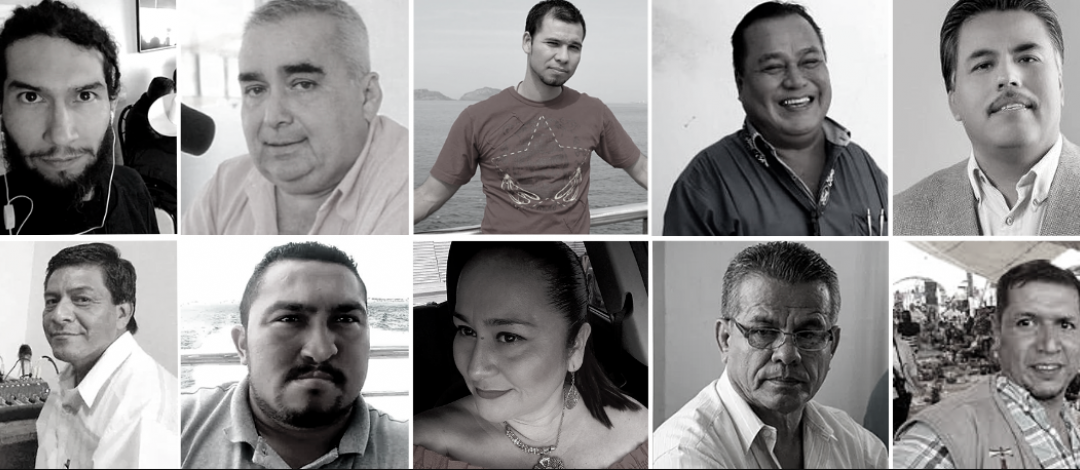
As Reporters Without Borders (RSF) reports on its website, two more murders in August have brought the number of journalists killed in connection with their work in Mexico in 2019 to at least ten, confirming Mexico’s status as the world’s deadliest country for the media. In the absence of a strong reaction from the government, RSF offers its recommendations on how to address this extreme level of violence and the almost total impunity.

More than 90% of the crimes of violence against journalists in Mexico go unpunished, fuelling the vicious cycle of violence and impunity. It was for this reason that, in March 2019, RSF asked the International Criminal Court to look into the impunity for murders and disappearances of journalists from 2006 to 2018, under President López Obrador’s two predecessors, Felipe Calderón and Enrique Peña Nieto.


In response to the surge in the number of journalists murdered in 2019, RSF has provided the Mexican authorities, including the president’s office, with its recommendations on the measures that need to be taken.


RSF recommends that the Mexican authorities should:


1) Reinforce journalists’ safety:

– By improving the effectiveness and response time of the Federal Mechanism for the Protection of Human Rights Defenders and Journalists, increasing its human and financial resources and enhancing its role in preventing risks, especially in the most dangerous states.


– By rapidly implementing the recommendations of the “Diagnosis of the Functioning of the Mechanism”, that the Office of the UN High Commissioner for Human Rights gave to the Mexican authorities on 29 July and made public on August 26.


– By implementing a general policy for taking care of journalists and family members who are the victims of forced displacement.


2) Reinforce investigative resources

Given that the Special Prosecutor’s Office for Crimes against Freedom of Expression (FEADLE) will soon be incorporated into a new Special Prosecutor’s Office for Human Rights, there is an urgent need to:

– Reinforce the FEADLE’s prerogatives and its human and financial resources.


– Quickly release the new guidelines for FEADLE investigations into crimes of violence against journalists and explain how the FEADLE’s decisions can be appealed.


– Encourage the FEADLE to make full use of its power under article 21 of the criminal code to transfer investigations into crimes against freedom of expression from the local to the federal level. RSF is of the view that this power should be used without delay in three of this year’s murder cases, those of Ruíz, Sarabia and Romero.


– Ensure that the new Approved Protocol for Investigating Crimes against Freedom of Expression, adopted in October 2018, is effectively applied.


– Ensure that the new Special Prosecutor’s Office for Human Rights – of which the FEADLE will be a section – quickly establishes close contacts with civil society organizations in order to discuss the new goals and challenges.


Mexico is ranked 144th out of 180 countries in RSF’s 2019 World Press Freedom Index.

(Source: RSF)

Radio programmes address climate change

The AIBs’ new People’s Choice category, focused this year on programmes dealing with climate change, is limited to television programmes.  This is because, unfortunately, it is difficult to ask an international audience to judge radio programmes because of language barriers.  At least with television we can (and will) provide subtitles in a range of languages for the programs to be chosen by popular vote, and the online viewers can see the original output and understand the way that the story is treated.  With radio, in order to convey the quality of a programme, a translation has to be very precise and convey the original intonation and expression.  We hope that AIB members and other colleagues working in radio will forgive us that we were not able to include radio this year.

This is a pity since there are many good examples of radio programmes dealing with climate change.  Only this week it was possible to hear:

  • Vatican Radio reporting on Pope Benedict XVI expressing serious concern for the plight of herders in Mongolia, where extreme weather conditions threaten the livelihood of hundreds of thousands.  The Pope stated that “environmental issues, particularly those related to climate change, are global issues and need to be addressed on a global level”
  • Vermont Public Radio (VPR) on the effects of climate change at Lake Champlain, which now often fails to freeze over in winter.  This visible result brings home the reality of the changes to local people.  While it causes problems, Curt Stager of Paul Smith’s College in the northern Adirondacks points out “It’s a mix of good news and bad news in a way. The bad news is that climate change is likely to amplify some of our existing environmental problems. And the good news is that you don’t have to reinvent the wheel to deal with that.”
  • MetadelPlaneta, the first radio programme in Mexico about climate change, appealing for funds
  • an online podcast about Project Survival Pacific, discussing the danger to low-lying islands in the Pacific of rising sea levels and how the islanders are reacting

However, there were claims that the 4th International Conference on Climate Change hosted by the Heartland Institute was not given coverage by the media.  But you can catch up here to see video and audio of the conference as it is posted.

The programmes mentioned above show how radio broadcasts can bring to life personal stories of how climate affects individuals all over the world.  But the continuing wide divergence of views about what change is happening, what causes it, how damaging it is and what we should do, still challenges the listeners ability to put facts into perspective and broadcasters ability to shed light.