
AI assistants misrepresent news content, says major study

AI assistants misrepresent news content, says major study

AI assistants misrepresent news content, says major study

New research coordinated by the European Broadcasting Union (EBU) and led by the BBC has found that AI assistants – already a daily information gateway for millions of people – routinely misrepresent news content no matter which language, territory, or AI platform is tested.

The intensive international study of unprecedented scope and scale was launched at the EBU News Assembly, in Naples. Involving 22 public service media (PSM) organizations in 18 countries working in 14 languages, it identified multiple systemic issues across four leading AI tools.

Professional journalists from participating PSM evaluated more than 3,000 responses from ChatGPT, Copilot, Gemini, and Perplexity against key criteria, including accuracy, sourcing, distinguishing opinion from fact, and providing context. 

Key findings: 

  • 45% of all AI answers had at least one significant issue.
  • 31% of responses showed serious sourcing problems – missing, misleading, or incorrect attributions.
  • 20% contained major accuracy issues, including hallucinated details and outdated information.
  • Gemini performed worst with significant issues in 76% of responses, more than double the other assistants, largely due to its poor sourcing performance.
  • Comparison between the BBC’s results earlier this year and this study show some improvements but still high levels of errors.

Why this distortion matters

AI assistants are already replacing search engines for many users. According to the Reuters Institute’s Digital News Report 2025, 7% of total online news consumers use AI assistants to get their news, rising to 15% of under-25s.

‘This research conclusively shows that these failings are not isolated incidents,’ says EBU Media Director and Deputy Director General Jean Philip De Tender. ‘They are systemic, cross-border, and multilingual, and we believe this endangers public trust. When people don’t know what to trust, they end up trusting nothing at all, and that can deter democratic participation.’

Peter Archer, BBC Programme Director, Generative AI, says: ‘We’re excited about AI and how it can help us bring even more value to audiences. But people must be able to trust what they read, watch and see. Despite some improvements, it’s clear that there are still significant issues with these assistants. We want these tools to succeed and are open to working with AI companies to deliver for audiences and wider society.’

Next steps

The research team have also released a News Integrity in AI Assistants Toolkit, to help develop solutions to the issues uncovered in the report. It includes improving AI assistant responses and media literacy among users. Building on the extensive insights and examples identified in the current research, the Toolkit addresses two main questions: “What makes a good AI assistant response to a news question?” and “What are the problems that need to be fixed?”.

In addition, the EBU and its Members are pressing EU and national regulators to enforce existing laws on information integrity, digital services, and media pluralism. And they stress that ongoing independent monitoring of AI assistants is essential, given the fast pace of AI development, and are seeking options for continuing the research on a rolling basis.

About the project

This study built on research by the BBC published in February 2025, which first highlighted AI’s problems in handling news. This second round expanded the scope internationally, confirming that the issue is systemic and is not tied to language, market or AI assistant.

Participating broadcasters:

  • Belgium (RTBF, VRT)
  • Canada (CBC-Radio Canada)
  • Czechia (Czech Radio)
  • Finland (YLE)
  • France (Radio France)
  • Georgia (GPB)
  • Germany (ARD, ZDF, Deutsche Welle)
  • Italy (Rai)
  • Lithuania (LRT)
  • Netherlands (NOS/NPO)
  • Norway (NRK)
  • Portugal (RTP)
  • Spain (RTVE)
  • Sweden (SVT)
  • Switzerland (SRF)
  • Ukraine (Suspilne)
  • United Kingdom (BBC)
  • USA (NPR)

Separately, the BBC has today published research into audience use and perceptions of AI assistants for News. This shows that many people trust AI assistants to be accurate – with just over a third of UK adults saying that they trust AI to produce accurate summaries, rising to almost half for people under-35.

The findings raise major concerns. Many people assume AI summaries of news content are accurate, when they are not; and when they see errors, they blame news providers as well as AI developers – even if those mistakes are a product of the AI assistant. Ultimately, these errors could negatively impact people’s trust in news and news brands.

The full findings can be found here: Research Findings: Audience Use and Perceptions of AI Assistants for News
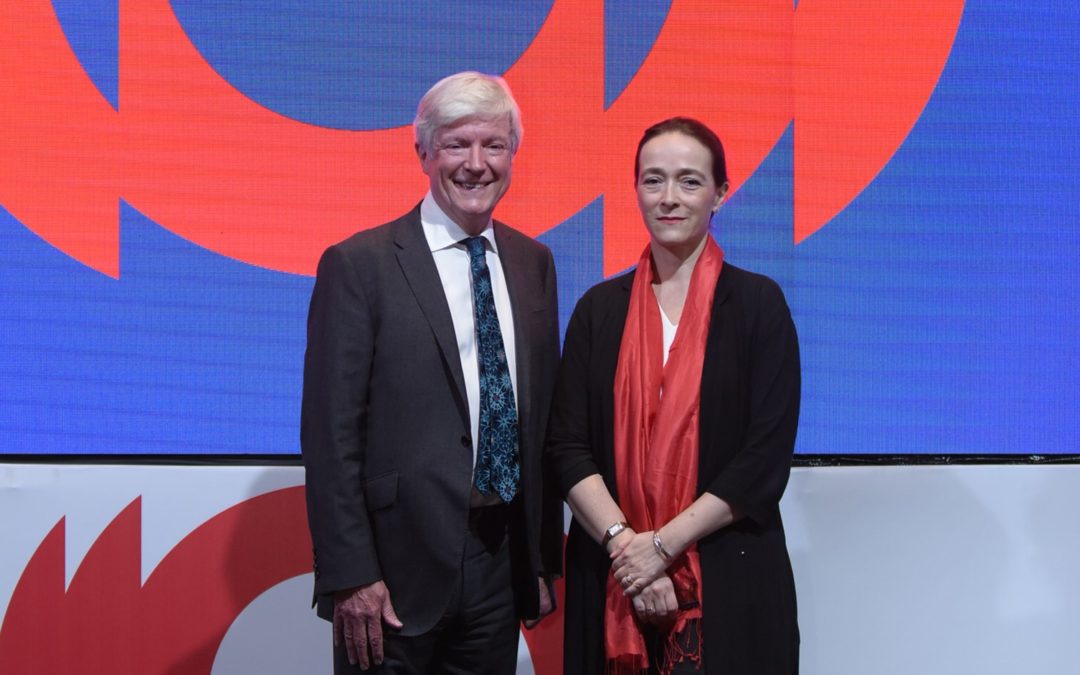
BBC DG and France Télévisions CEO elected EBU President and Vice-President

BBC DG and France Télévisions CEO elected EBU President and Vice-President

The European Broadcasting Union (EBU) has elected BBC Director General Tony Hall as its new President, and France Télévisions CEO Delphine Ernotte Cunci to serve as EBU Vice-President.

Both were elected by absolute majority at the EBU’s 80th General Assembly in Tirana on 29 June.

They will succeed outgoing President Jean-Paul Philippot, General Administrator of the Radio Télévision Belge de la Communauté Française (RTBF), who has served as EBU President since 2009, and RAI (Radiotelevisione Italiana) President Monica Maggioni, EBU Vice-President since 2015.

Hall and Ernotte Cunci will take up their new roles from 1st January 2019 for a two-year period. Since they are not already members of the EBU Executive Board, they shall each assume non-voting Observer status on the Board until their term of office begins. The EBU Executive Board is made up of 11 members.

Following EBU procedure for nominations on the Executive Board, the President and the Vice-President elected for the next term co-opt a third person chosen for having experience in how the EBU operates. Together, they constitute the Board Nomination Committee, which will draw up a list of candidacies for a seat on the Board; these candidacies must be received no less than 10 weeks before the General Assembly Winter Session.

The Board Nomination Committee sends the list to all EBU Active Members for comments.

After receiving these the Committee sends “to all Active Members its list of nine candidates, which shall be balanced and include persons from the main contributors to the Union and from other categories of Members, reflecting the geographical and cultural diversity of the Union.”  

The nine members who will serve on the Board, with the President and Vice-President, are all senior representatives of EBU Active Member organizations and are elected by the General Assembly at its winter session for a two-year tenure.

The Executive Board meets around seven times a year.

The EBU has 73 Members in 56 countries from Europe and beyond

Trust in broadcast increasing as it falls in social

Trust in broadcast increasing as it falls in social

A new study by the EBU Media Intelligence Service shows that:

  • Broadcast media and print media “increased their level of trust compared to last year, the Internet and social media lost even more trust. The trust gap between broadcast and social media is widening.” Level of trust in print media is at a neutral level (0%)
  • Broadcast media are trusted: “out of the 33 countries surveyed, radio is the most trusted media (overall trust index +25%) in 24 countries, and TV (overall trust index +6%) in six countries”
  • Social media are by far the least trusted media: in 28 out of 33 countries, social networks are the media people trust the least (overall trust index -42%), followed by online media (-17%). The majority of these countries are Western European.
  • Over the 2012-2017 period radio and TV always ranked as the most trusted. Print media recovers from overall trust index of -14% to level (0%). Online and social media overall trust index keeps declining to all-time-low levels from, respectively -9% to -17% and -33% to -42%
AIB confirms support of .radio TLD

AIB confirms support of .radio TLD

The Association for International Broadcasting has confirmed its commitment to supporting the .radio top level domain at the Salon de la Radio in Paris. The new .radio top level domain is a community-based domain that the AIB has supported throughout the application process, along with other broadcasting unions. ICANN granted the .radio domain last year, with the EBU as the principal organiser.

The first World .Radio Advisory Board meeting took place in Paris on 30 January where a range of issues concerning the launch of the top level domain were discussed. At the meeting, the President and Vice-Presidents of the Advisory Board were elected.

The AIB’s chief executive, Simon Spanswick, was elected President (centre in picture above); Nawaaz Doohkee, Head of Legal Affairs at the ABU (third from right) and Vincent Sneed, Director of Regulatory Affairs at the AER (third from left) were elected Vice Presidents.

“It is a great honour to be elected to lead the work of the World .Radio Advisory Board,” commented Simon Spanswick. “Along with my colleagues from other broadcasting unions and associations, we will be working to make the .radio top level domain a tremendous success across the radio industry. There has already been interest from broadcasters and from other organisations involved in the ever growing radio industry in making effective and creative use of this new top level domain. In the coming months as we move closer to the opening of registrations, we will be working to ensure that everyone involved in radio around the world has the opportunity to harness the power of .radio addresses on the Internet.”

For more information on the .radio top level domain, visit register.radio.

New top level domain for the world’s radio industry

New top level domain for the world’s radio industry

In 2017, a new top level domain (TLD) will be launched on the Internet for the global radio industry.

.radio is a Community TLD, led by a community of interest for the benefit of the entire radio community. The Association for International Broadcasting joined with other organisations around the world to support the .radio application to the Internet’s controlling body.

ICANN accepted .radio as a TLD to be administered by the world’s radio industry, administered by the EBU and supported by an advisory board. The board will convene at the end of January at which time its membership will be confirmed and the chair and deputy chair will be elected.

“The Association for International Broadcasting is delighted to be closely involved with the radio industry’s new top level domain,” says Simon Spanswick, AIB chief executive. “The Association will be working closely with the EBU and other partners involved in this exciting project that will offer radio broadcasters, web radio stations, radio amateurs and radio equipment manufacturers the ability to demonstrate their commitment to radio through their web address.”

More information for the AIB’s Members will be published over the coming weeks.