BBC Eye investigates China’s silenced journalist Sophia Huang Xueqin

BBC Eye investigates China’s silenced journalist Sophia Huang Xueqin

BBC Eye investigates China’s silenced journalist Sophia Huang Xueqin

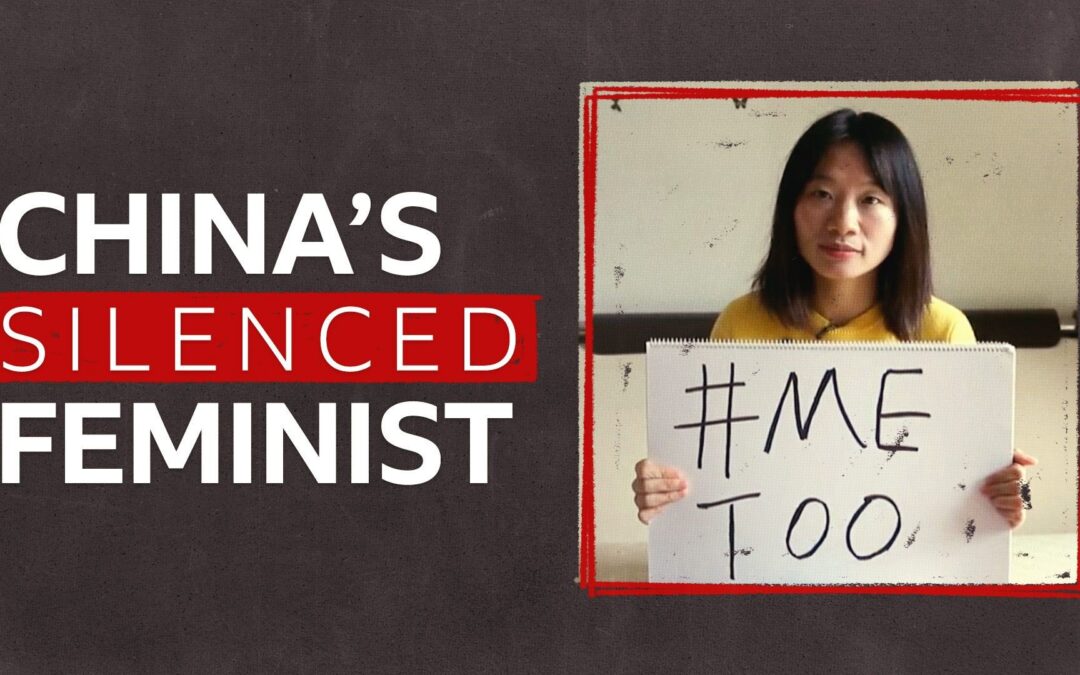
The BBC’s investigation unit, BBC Eye, has examined the disappearance of Sophia Huang Xueqin, one of China’s most high-profile women’s rights journalists and a sexual-assault survivor who kick-started China’s #MeToo movement. 

In June 2021, Sophia Huang Xueqin was awarded a prestigious Chevening scholarship and was meant to be starting her master’s degree on Gender Violence and Conflict at the University of Sussex in September that same year. However, on the way to the airport to catch her flight to the UK, Sophia and fellow labour activist Wang Jianbing “vanished”. 

Seven months after Sophia’s disappearance, in the documentary, China’s silenced feminist, BBC Eye investigates what happened to Sophia, how her story is being erased by Chinese state censors, and how a disinformation campaign is being played out online against her. The BBC also asks why in the UK, where Sophia should be studying on a British government scholarship, there’s been silence.

In China, tens of thousands of individuals are being rounded up and questioned in a wider state crackdown on activists. Feminists who continue to speak out are forced to remain anonymous. Many like Sophia and Jianbing, who are advocating for gender rights and other social causes, have been framed as agents of “hostile western forces” and received attacks online by nationalist trolls. 

The BBC gained exclusive access to other former female detainees who agreed to speak on the condition of anonymity.  “There’s no offline campaigns anymore … the political atmosphere has become very nervous.”

Former Weibo censor, Liu Lipeng, gave the BBC a rare interview where he breaks down the state’s censorship apparatus and reveals Beijing’s disinformation campaign against Sophia. “On the Chinese internet, it’s difficult to differentiate between a state internet commentator and an ordinary user,” Liu said. “It’s a scary phenomenon.” Weibo did not respond to the BBC’s request for comment.

The BBC also talks to Li Maizi, a prominent Chinese feminist, who was detained ahead of International Women’s Day in 2015 for attempting to hand out stickers protesting sexual harassment on public transport: “In the past [sexual harassment and violence] was covered. The #MeToo movement provided a venue for people to speak out.”

When Huang’s disappearance was first reported, the University of Sussex and Chevening released the following statement: “We are concerned about the safety and whereabouts of our student. Our staff are liaising with Chevening to seek further details.” But since then, neither have published further statements. 

In an email leaked to the BBC, following the BBC’s requests for comment, students and staff at the University of Sussex were warned not to discuss Sophia’s situation. The university told the BBC that because this was a sensitive matter, media requests should be dealt with by the press office, citing data protection concerns.  Supporters of Sophia and Jianbing accuse the university and Chevening of not speaking out for fear of antagonising the Chinese government. Students from China make up a fifth of international enrolment at the university, and their tuition fees – along with partnerships with Chinese institutions – provide an important revenue stream.

Responding to the BBC, a spokesperson said the university “remains deeply concerned about the safety and whereabouts of its prospective student” and has been in “regular contact” with Chevening and the Foreign, Commonwealth and Development Office (FCDO). 

The spokesperson added that the university has followed the advice of the FCDO – which told the BBC it was “following the matter closely.” Chevening did not respond to the BBC’s requests for comment.

The BBC reveals that Sophia and Jianbing were detained in secret locations known as “black jails” where they were held in solitary confinement without access to lawyers and outside world. At least 70 of their supporters were questioned and interrogated by the Guangzhou National Police. Now, Sophia and Jianbing are being held on charges of “inciting subversion of state power,” a serious charge which could see them facing years behind bars.  Their cases have been handed over to prosecutors in China, and both are expected to face trial soon.

The documentary, China’s silenced feminist, is now available via BBC platforms: BBC iPlayer (available only in the UK), BBC News YouTube (worldwide, except the UK), the websites bbc.co.uk and bbc.com/news, and on BBC News Chinese. The documentary will air on the BBC’s international news channel, BBC World News, on 28 May.  

Photo credit SCMP

[Source: BBC press release]

Pegasus and China-sponsored hacking cause alarm across media industry

Pegasus and China-sponsored hacking cause alarm across media industry

Pegasus and China-sponsored hacking cause alarm across media industry

This week’s revelations about the scale of infiltration of mobile phones used by journalists – including those working for a range of AIB Member companies – and further intelligence about the China’s cyber attacks on US companies, including Microsoft Exchange systems has sent shockwaves through the media and cyber security industries.

According to reports in the UK’s Guardian and the US Washington Post, the spread of Pegasus spyware has infiltrated the mobile phones of thousands of journalists, activists and lawyers, notably those involved in human rights cases. Journalists working for AIB Members Al Jazeera, Bloomberg and France 24, as well as Agence France-Presse, The Wall Street Journal, CNN, The New York Times, El Pais, the Associated Press, Financial Times, Le Monde, The Economist, and Reuters, were targeted by the Pegasus spyware, The Guardian reported.

The phone numbers of the affected phones were leaked to Amnesty International who worked with Forbidden Stories, a not-for-profit Paris-based journalism organisation. Amnesty has verified hundreds of the numbers tracing the users.

The AIB reported on the first Pegasus revelations in December 2020. The scale of the spyware infiltration had not been realised at that point.

This incident, and its scale, demonstrates the need for constant vigilance by everyone working in media organisations. The threats are real and immediate and it is why the AIB is involved in urgent, wide-scale research into the vulnerabilities that exist within the Internet of Things (IoT) that can be harnessed by malign actors. This work is being undertaken by the AIB’s research assistant and Doctoral student at the University of Oxford and will be provided to all AIB Members in order to help them better protect their organisations and staff from the increasing number of attacks that are being perpetrated. We have received input from a large number of AIB Members to assist in this work, including workflows and other data that will inform this major, important research project. Contact the AIB Secretariat to discuss how your organisation can get involved, or benefit from the work.

Separately, the US Cybersecurity and Infrastructure Security Agency [CISA] has provided background and support in connection with the Chinese cyber threat that has hit critical infrastructure in the USA and elsewhere in the world. CISA has uploaded the Current Activity regarding the U.S. Government release of an indictment and several advisories detailing Chinese cyber threat activity.

CISA reports that it, the Federal Bureau of Investigation (FBI), and the National Security Agency (NSA) have observed increasingly sophisticated Chinese state-sponsored activity targeting U.S. political, economic, military, educational, and critical infrastructure personnel and organisations. In response:

CISA also encourages users and administrators to review the blog post, Safeguarding Critical Infrastructure against Threats from the People’s Republic of China, by CISA Executive Assistant Director Eric Goldstein and the China Cyber Threat Overview and Advisories webpage.

The UK’s National Cyber Security Centre has also published details of the UK’s response to the Chinese threat. Its release says:

The UK has revealed that Chinese state-backed actors were responsible for gaining access to computer networks around the world via Microsoft Exchange servers. The NCSC assessed that it was highly likely that a group known as HAFNIUM, which is associated with the Chinese state, was responsible for the activity.

The NCSC recommends following vendor best practice advice in the mitigation of vulnerabilities, and any organisations which have yet to install security updates released for Microsoft Exchange servers should do so. More information can be found on Microsoft’s website: https://msrc-blog.microsoft.com/2021/03/02/multiple-security-updates-released-for-exchange-server/

The attack on Microsoft Exchange software was highly likely to enable large-scale espionage, including acquiring personally identifiable information and intellectual property. It is the most significant and widespread cyber intrusion against the UK and allies uncovered to date.

The UK is also attributing the Chinese Ministry of State Security as being behind activity known in open source as “APT40” and “APT31”. Activity relating to APT40 included the targeting maritime industries and naval defence contractors in the US and Europe, and for APT31 the targeting of government entities, including the Finnish parliament in 2020.

The NCSC statement is available on its website: https://www.ncsc.gov.uk/news/uk-allies-hold-chinese-state-responsible-for-pervasive-pattern-of-hacking

The UK Foreign Secretary’s statement is available at: https://www.gov.uk/government/news/uk-and-allies-hold-chinese-state-responsible-for-a-pervasive-pattern-of-hacking

David Kaye, former UN Special Rapporteur on freedom of expression and Marietje Schaake, International Policy Director at Stanford University’s Cyber Policy Centre, have written an op-ed piece in The Washington Post. It’s behind a paywall, although a limited number of articles are available free-of-charge each month. Read the piece here. David Kaye was one of the key contributors to the AIB/PMA Media Freedom Summit held earlier this year that brought together senior executives of broadcasters globally to discuss the challenges posed by media freedom infringements. 


Calls for Eutelsat to drop Chinese state TV channels

Calls for Eutelsat to drop Chinese state TV channels

Calls for Eutelsat to drop Chinese state TV channels

According to a report carried on the RFI website, 13 people who describe themselves as the “victims of forced confessions broadcast on Chinese television” have written an open letter to Europe’s largest satellite operator, Eutelsat, asking it to review company policy of broadcasting Chinese channels CGTN and CCTV-4.

In the letter dated 30 March, the asked French satellite TV company Eutelsat, to reconsider its policy of carrying Chinese state media. The signatories allege that they “were forced by the Chinese police to record confessions to alleged crimes and these were then broadcast by Chinese state-owned, Communist Party-controlled television networks – CGTN and CCTV-4 – both of which are aired in France via Eutelsat”.

Asked to respond to the allegations, Eutelsat has told RFI that “it is not within its remit to judge the content and suspend the broadcast of a channel under contract without an injunction from a competent authority”.

Paris-based Eutelsat is the world’s third largest satellite operator in terms of revenue. Its 39 satellites provide broadcasts for almost 7,000 television stations, including Sky, Fox News, RFI’s sister channel France24, BBC World and CNN International, covering most of Europe, but also beaming into Africa, Asia and the Americas.

The 13 signatories include 11 Chinese citizens and two non-Chinese, representing dozens of people who found themselves detained or imprisoned by Chinese authorities, and who were forced to publicly admit their supposed wrongdoings.

Torture

“As direct victims of this practice, we appeal to you to carefully examine the information provided below, and to consider whether TV providers in democratic societies should continue to be morally complicit in airing such intentionally distorted information obtained through torture, threats and deprivation,” wrote the thirteen.

The open letter is supported by the Spain-based human rights organisation Safeguard Defenders, whose founder, co-signatory Peter Dahlin, was himself paraded in front of millions of viewers on China’s central television. Dahlin says that the accused were “denied the right to fair trial, the right to see a lawyer, and the right not to be tortured,” while they found themselves forced by threats to their families, themselves “and through torture,” to agree to appear in front of the cameras and “confess” their crimes.

According to the signatories, China’s state television has aired forced confessions of more than 100 people since Xi Jinping came to power in 2013, pointing out that “most victims are rights lawyers, NGO workers and journalists”.

The letter notes that Australian public broadcaster SBS temporarily halted using CGTN content in March pending a review of human rights concerns. In February, the UK broadcast regulator Ofcom removed CGTN from the airwaves for partiality and violation of privacy. The Chinese channel then successfully sought a European broadcast licence via French regulator CSA.

Just weeks after the CSA had determined that CGTN met the technical criteria required for broadcasting, Safeguard Defenders submitted two complaints against the channel.

China retaliated against the CGTN expulsion from the UK by banning the BBC from broadcasting in China – even though the reception of the BBC in China is limited to compounds for foreigners and 5-star hotels. In a reaction to Safeguard Defenders’ complaints, CGTN said the rights group intended to “distort and harm China’s image and interests”.

Meanwhile, Eutelsat points out that responsibility for the content “in the case of non-European channels rests with the regulator of the country where the uplink is located,” in this case the France-based CSA, “which also has the ability to take legal action”.

According to the RFI report, Eutelsat insists it will “immediately comply with any subsequent decision by the CSA or the French courts, as it does systematically.”


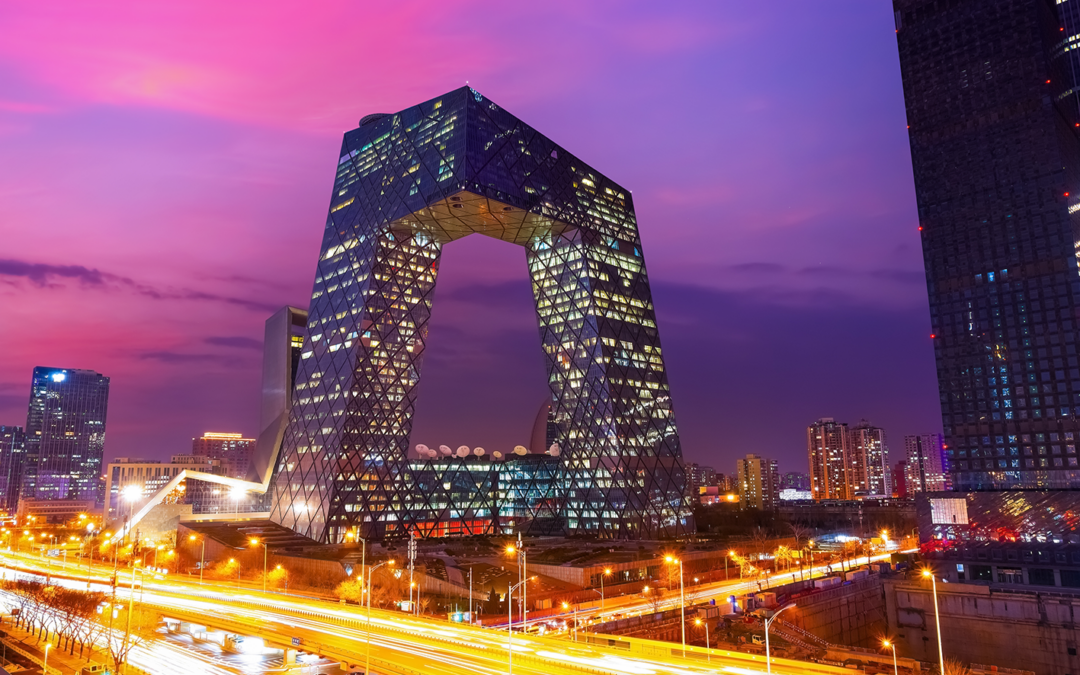
Main picture: CCTV headquarters in Beijing

France 24 – programme highlights

France 24 – programme highlights

France 24 – programme highlights

Reporters Plus – Zambia: Under Chinese Influence

2010 GMT, Saturday 27 March

Over recent years, China has become an alternative source to Western aid for many African countries. In this “Reporters Plus”, France 24 focuses on Beijing’s influence on the continent with the example of Zambia. Indeed, it is the African country where China invested the most in 2020.

The relationship between the two countries goes back to the 1960s. Today, China owns a third of Zambia’s debt and Chinese companies are present in every key sector, from agriculture to mines and industry. While the Chinese presence in the country was praised at first, it is now facing growing criticism, openly voiced by those on the campaign trail in the run up to the presidential election.

With China using the Covid-19 crisis to strengthen its health diplomacy in Africa, France 24’s journalists Roméo LangloisNicolas Germain and Yi Song had unprecedented access to Chinese companies in Zambia, shared the daily lives of their directors and bring viewers an exclusive report.

Global Task Force for Public Media speaks out on China BBC ban

Global Task Force for Public Media speaks out on China BBC ban

Global Task Force for Public Media speaks out on China BBC ban

The following is a statement by the Global Task Force for public media:

The Global Task Force for public media is deeply concerned by the decision of the government of the People’s Republic of China to ban BBC World News from broadcasting in the country. The ban was announced on February 11, 2021 by the National Radio and Television Administration, China’s media regulator.

RTHK, Hong Kong’s public broadcaster, also announced that it will no longer carry BBC World Service or BBC News Weekly in Cantonese, as of February 12, 2021.

Taken together, these actions severely restrict access to trusted sources of news and media freedom within the region. Access to independent journalism is a basic right and critical for citizens everywhere to be informed.

Signed, Global Task Force for public media

David Anderson, Managing Director, ABC (Australia)
Thomas Bellut, Director General, ZDF (Germany)
Delphine Ernotte Cunci, President & CEO, France Télévisions (France)
Jim Mather, Chair of the Board, RNZ (New Zealand)
Hanna Stjärne, Director General, SVT (Sweden)
Catherine Tait, President & CEO, CBC/Radio-Canada, GTF Chair (Canada)
Yang Sung-dong, President & CEO, KBS (South Korea)

About the Global Task Force
The Global Task Force exists to promote and defend the values of public media—access, accuracy, accountability, creativity, impartiality, independence and high standards of journalism—all of which underpin an informed and healthy democracy.