Matt Brittin appointed new BBC Director-General

Matt Brittin appointed new BBC Director-General
Matt Brittin appointed new BBC Director-General

He will take over the role on 18 May

“At its best, it shows us, and the world, who we are. It’s an extraordinary, uniquely British asset, with over 100 years of innovation in storytelling, technology and powering creativity.  I’m honoured and excited to be asked to serve as Director-General.”

— Matt Brittin, Incoming Director-General

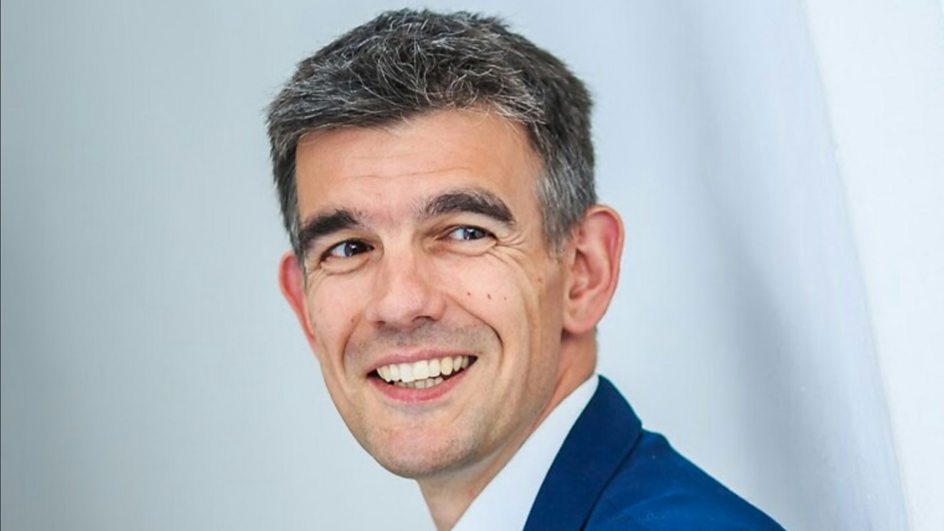
The BBC Board has today appointed Matt Brittin as the 18th Director-General of the BBC. Matt, former President Google EMEA, will take over the role on 18 May.

The Director-General of the BBC is the Corporation’s chief executive officer and editor-in-chief. They are responsible for the creative, editorial and operational leadership of the BBC within the United Kingdom and around the globe.

As previously confirmed, Rhodri Talfan Davies will lead the BBC as Interim Director-General following Tim Davie’s departure on 2 April. During this period, Matt will undergo an onboarding process and begin detailed introductory meetings to get a full understanding of the business. Rhodri will have full executive responsibility until 18 May, when Matt begins his tenure.

Among his other priorities, Matt intends to appoint a Deputy Director-General.

Samir Shah, Chairman of the BBC Board, said: “Matt brings to the BBC deep experience of leading a high-profile and highly-complex organisation through transformation. He is an outstanding leader and has the skills needed to navigate the organisation through the many changes taking place in the media market and in audience behaviours.

“Matt’s passion for the BBC, his understanding of the challenges facing the organisation, his commitment to its independence and his determination to maintain the BBC’s position as one of the country’s greatest national assets were critical factors in the Board’s decision to appoint him as the 18th Director-General.

“Matt joins the BBC at a critical time. The Government’s review of the Charter is underway, and it is clear there is need for radical reform of the BBC, its funding model and the framework in which it operates. The stakes for the BBC, and the future of public service broadcasting, have never been higher.

“The Board and I believe Matt is the right person to lead the BBC as it fights for a sustainable future in an uncertain world, for the benefit of audiences and the UK.”

Incoming Director-General, Matt Brittin, said: “Now, more than ever, we need a thriving BBC that works for everyone in a complex, uncertain and fast changing world. At its best, it shows us, and the world, who we are. It’s an extraordinary, uniquely British asset, with over 100 years of innovation in storytelling, technology and powering creativity. I’m honoured and excited to be asked to serve as Director-General.

“Working alongside so many talented journalists, creatives and technicians, across the country and around the world, I join with humility, to listen, to learn, to lead, and to serve the public, working hard to earn their trust every day.

“This is a moment of real risk, yet also real opportunity. The BBC needs the pace and energy to be both where stories are, and where audiences are. To build on the reach, trust and creative strengths today, confront challenges with courage, and thrive as a public service fit for the future. I can’t wait to start this work.”

Matt joined Google in 2007 to lead the UK business and left in 2025 after heading their EMEA region for ten years. He previously worked in regional and national press and in consulting on media and technology. Matt served on the Board of Sainsbury’s for nine years and has just stepped down from the Board of the Guardian Media Group.

Notes to Editors

  • The salary of the new Director-General will be £565,000
BBC launches emergency lifeline radio programme for Iran

BBC launches emergency lifeline radio programme for Iran

BBC launches emergency lifeline radio programme for Iran

BBC World Service has launched a temporary emergency lifeline radio programme for Iran in response to the ongoing turmoil in the country, and the unprecedented crackdown on protests.

To complement the existing BBC News Persian video and digital services, the radio programme will be available on medium wave and shortwave across Iran to increase the population’s access to news and information. To broaden its offer and availability of programming, the BBC World Service has also made some of its TV content available on medium wave radio.

Since 8 January, the Iranian people have been subject to an internet blackout. Prior to this, BBC News Persian’s digital services saw their biggest reach in a year with their platforms reaching more than 33 million people.

The short-term programme will cover the latest news and developments in Iran and will place events inside the country within their wider regional and international context. It will feature voices from inside Iran alongside clear, informed analysis of the most recent political, social, and economic developments shaping the situation in the country.

The programme will air daily for 30 minutes across medium and shortwave frequencies from 4.30pm GMT / 8pm Iran Standard Time. The temporary programme has been granted resource from existing funds until the end of March 2026.

Fiona Crack, Interim Global Director, BBC News, says: “A key role of the BBC World Service is to step up in times of crisis to provide news and information for our audiences in greatest need. BBC News Persian reaches one in four adults in Iran, which is an astonishing feat considering their reporting is banned in the country.

“The team have been essential in telling the urgent story of the Iranian people to audiences around the world, and our new radio programme will give the Iranian people more ways to access independent and impartial news.”

Tarik Kafala, Interim Regional Director, Middle East and North Africa, says: “BBC News Persian have worked tirelessly to deliver journalism throughout this period of unrest as the demand for trusted news has soared in Iran. The teams have supplied extended TV hours in Iran and an increased offer on digital platforms for the Iranian people. They have reported for UK audiences across bulletins, live pages and on forensic journalism with BBC Verify.”

BBC World Service has a history of launching emergency services in times of crisis. In April 2025, BBC News Burmese started providing audio and video content on a satellite channel in the aftermath of Myanmar earthquake.

In December 2024, following the fall of the Assad regime, BBC World Service set up an enhanced audio channel on FM and medium wave for the people of Syria. This follows the emergency radio service for Gaza in November 2023 and for Sudan in May 2023 amid conflict.

In February 2022, the BBC News Ukraine service extended TV bulletins following the invasion of the country.

Where to find the programme:

  • The live programme will be available at 4.30pm GMT (8pm Iran Time) on 702kHz medium wave and 9465kHz short wave
  • The programme will be repeated at 6pm GMT (9.30pm Iran time) on 702kHz mediumwave and 5935kHz shortwave
  • A visualised version of the programme will be broadcast on BBC Persian TV at 6pm GMT (9.30pm Iran time)
BBC News Uzbek launches on TikTok

BBC News Uzbek launches on TikTok

BBC News Uzbek launches on TikTok

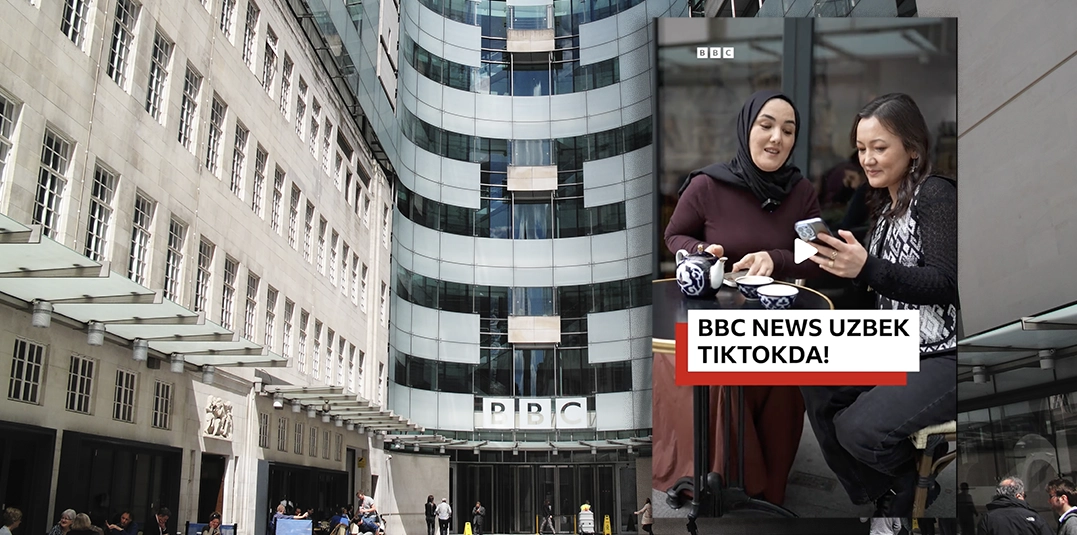
BBC News Uzbek (BBC News O‘zbek) has expanded its social-media reach with the launch of its channel on TikTok where the @bbcnewsuzbek feed now brings videos to Uzbek-speakers – in Uzbekistan, Central Asia and beyond. 

The BBC News Uzbek newly launched TikTok channel adds to the service’s social-media presence: on YouTube (more than 2 million subscribers), InstagramFacebook (with separate feeds for audiences in Uzbekistan, Afghanistan and elsewhere, using different scripts), XTelegram, WhatsApp, and the Russian network OK.ru.

Across its digital platforms, BBC News Uzbek reaches a weekly audience of 1.67 million people – an increase of 37% since the year before. The launch of the @bbcnewsuzbek feed on TikTok builds on the success of the service’s presence on Instagram where around 800,000 people engage with its content every week.

BBC News Uzbek News Editor, Khayrullo Fayz describes the launch on TikTok as a natural next step in better serving younger audiences: “We have always prioritised meaningful conversations, producing unique and original journalism that serves our audiences in Uzbekistan and the wider region. TikTok is another platform through which we can deliver our offer to younger generations of Uzbek-speakers, wherever they are: reporting and explaining the news, listening to our audiences and asking questions, with them and for them, to understand the issues that matter, as well as tackling disinformation and misinformation with the BBC’s impartial and independent journalism.”

In addition to current news, the BBC News Uzbek feed on TikTok will bring content on subjects that are in demand with its audience, including health, education, and history.

BBC News Uzbek is part of the BBC World Service. 

BBC asks UN to condemn Iran allegations

BBC asks UN to condemn Iran allegations

BBC asks UN to condemn Iran allegations

In a formal filing to the United Nations over the targeting of BBC News Persian staff and their families, the BBC World Service has expressed deep concern over Iran’s new and extreme language used in relation to BBC News Persian. It has urged the UN experts to condemn Iran’s conduct towards the BBC and Iran’s attempts to frame independent journalism as a form of “terrorism” and “warfare”.

In September 2025, Iran responded to the UN urgent appeal filed in June by the BBC World Service where the BBC raised concern with the escalation of harassment, targeting and threats towards the BBC News Persian staff – and their families in Iran – in the wake of the service’s reporting on the Iran-Israel conflict. The BBC also had urged the UN to take action after the publication of the report by the Intelligence and Security Committee of the UK Parliament in July this year about Iran’s transnational repression. The “Iran” report confirmed that in the previous 12-18 months there was an escalation of physical threats and consistent targeting of the UK-based Persian-language media organisations, whom Iran perceives as “deeply undermining of the Iranian regime”; that BBC News Persian was a “prominent target” of transnational repression from Iran; and that there was a “high risk of physical attacks” in the UK.

In its response to the UN, Iran justified its ongoing, unlawful actions towards BBC journalists. Using extreme language regarding the BBC for the first time in an official filing with the UN, Iran accused BBC News Persian in “media warfare”, “trying to target the security of the country by influencing the beliefs, culture, politics and behaviour of society”. Making unfounded allegations against BBC News Persian and its reporting, Iran called on the UN rapporteurs to “evaluate” the work of Western media such as the BBC as “media terrorism”. Iran’s response also marks the first time its government has officially acknowledged that legal action has been taken against BBC News Persian staff in Iran. Before this admission, attempts to obtain information on this from the judiciary in Iran have failed.

Tarik Kafala, Middle East and North Africa Regional Director, BBC World Service, said: “The extreme, highly alarming language the Islamic Republic of Iran has used in an official government filings with the UN demonstrates the Iranian authorities’ attitude towards independent journalism and our reporting of the country. We are deeply concerned that, instead of putting an end to the harassment and threats to our staff and their families in Iran, with this language Iran signals new forms of targeting them, now justifying their persecution with counter-terrorism and national security laws. We condemn these actions.”

Laura Davison, NUJ general secretary, added: “The UN must condemn the escalating intimidation and persecution of media workers by the Iranian state. Journalists at BBC Persian are paying a huge personal price simply for doing their job. It takes enormous courage and the deepest sense of duty for a journalist to continue pursuing the truth in the face of relentless state repression. The NUJ stands in solidarity with journalists under threat and demands an end to the Iranian state’s campaign against press freedom and journalists’ rights.”

Counsel for the BBC World Service has today filed with the UN a submission, expressing alarm over the extreme language used by the Islamic Republic of Iran in relation to the BBC’s reporting and over Iran’s attempt to justify the ongoing unlawful actions towards BBC staff and their families. The submission urges the UN experts to condemn Iran’s conduct towards the BBC and Iran’s attempts to frame independent journalism as a form of terrorism and warfare. The BBC calls on the UN experts to request further information from Iran about the legal action against the BBC. It urges them to directly raise concern with Iran about efforts to characterise BBC journalism as “media terrorism” or “soft war” and about abusing national security and counter-terrorism laws to target and harass journalists and their families.

The BBC World Service has engaged with the UN over the protection of its Iranian journalists and their families since 2017, after Iran launched a national security criminal investigation into 152 BBC staff and former staff, along with an asset freeze against all of their assets in Iran, including those owned jointly with family members. Since then, a number of BBC News Persian journalists have been convicted in absentia in Iran for their reporting.

BBC News Persian is part of the BBC World Service. 

When Water Burns: BBC Eye investigation into Georgia protests

When Water Burns: BBC Eye investigation into Georgia protests

When Water Burns: BBC Eye investigation into Georgia protests

When Water Burns: BBC Eye investigates potential use of World War One chemical against anti-government demonstrators in Georgia

An investigation by the BBC World Service’s award-winning BBC Eye Investigationsteam has uncovered evidence suggesting that during protests in Tbilisi last year, the Georgian government used water cannons laced with a chemical weapon against its own citizens. In the documentary When Water Burns – The Fight for Georgia, the BBC Eye finds that anti-government demonstrators are likely to have been targeted with “camite”, a chemical agent first used during World War One.

Talking to BBC Eye, the protesters describe the effect of the water cannons used against them as a burning sensation. One protester, who says he suffered from skin irritation on his face for “at least a month”, shared a photograph showing his skin peeling. He said the water “didn’t only get you wet, it also burned your skin”.

The documentary reveals the results of a medical study shared exclusively with the BBC. Having interviewed nearly 350 protesters exposed to riot-control agents and water cannons, the study by Dr Konstantine Chakhunashvili – a doctor and anti-government protester who was among those sprayed by the cannons – showed that nearly half suffered longer-term effects (beyond 30 days) such as a cough, shortness of breath, and skin irritation. In some cases, changes were observed in the lungs and heart.

BBC Eye speaks with high-level whistleblowers from inside the Georgian riot police, who helped determine the likely identity of the chemical agents used in water cannons – information which the Georgian government has so far refused to reveal. A key part of the evidence is a classified inventory from the Special Tasks Department – the main riot-police force in Georgia – that lists two chemicals and gives instructions on how to mix them. The chemicals are not regular tear gas.

A former Head of Weaponry at the riot police tells the BBC he was asked to test a mixture of two chemicals in the water cannons whilst in post. Describing the gas as 10 times stronger than regular tear gas, he says it made it difficult to breathe and caused some of his colleagues to vomit.

After reviewing the BBC’s evidence – the medical study, witness statements, whistleblower interviews and human-rights reports – world-leading expert in toxicology and chemical weapons, Professor Christopher Holstege, at the University of Virginia, believes the gas could be camite. First used as a chemical weapon by French forces at the end of World War One, camite is an obsolete riot-control agent that was dropped due to the persistence of its impact. The UN Special Rapporteur on Torture, Dr Alice Jill Edwards, says that, based on the BBC’s evidence, this could be classed an “experimental weapon”, and its use would be in violation of human-rights law.

Georgia’s ruling party, the Georgian Dream, described the allegation that unknown chemicals had been added to the water cannons as “deeply frivolous” and “absurd”. The party said that the country’s law enforcement had acted “within the bounds of the law and constitution” when responding to the “illegal actions of brutal criminals”.

When Water Burns – The Fight for Georgia is available in the UK on BBC iPlayer. It will also be part of the 1 December edition of the BBC Two current-affairs programme, Global Eye, which presents forensic journalism from BBC Eye and features reports from the BBC World Service’s global teams.  

International audiences can watch the documentary on the BBC World Service YouTube channel.

Read the story on the BBC News website – via bbc.co.ukin the UK; and internationally – on BBC.com, BBC Studios global digital news platform.